Puebla is a city to approach with an appetite, but not necessarily a long tasting list. A considered lunch, a look at everyday food trade and a short historic-centre walk can tell you more than an afternoon spent chasing dishes between distant addresses. Start by deciding what you want to eat; let the rest of the day grow around that choice.
For an October visit, mole poblano is a useful starting point. Chiles en nogada may be the dish you have seen in photographs, but its seasonal story matters. The aim is to enjoy what is actually being prepared, not to force a menu to match an image saved months ago.
Choose the main meal before filling the afternoon
Visit Puebla lists mole poblano, pipián de pepita, chalupas, cemitas and molotes among the state’s representative foods. That is an introduction, not evidence that one restaurant serves every dish or that every version tastes alike. Choose one substantial meal and leave the smaller tastes optional.
If you choose mole, ask how the kitchen serves it: what accompanies the sauce, the available portion and what is included in the price. Give yourself time to notice the combination rather than treating it as a quick tick before the next address. A recommended dish still needs to suit your appetite and dietary requirements.
- Read the current menu and confirm the final price before ordering.
- Ask about ingredients and shared preparation if you have a dietary restriction. A sauce’s name is not a complete ingredient list.
- Check what comes with the plate before adding side dishes.
- Leave room for a later snack only if you actually want one; a city food visit is not an eating competition.
Choose a venue with a clear address and hours confirmed for your visit. Ask about reservations if a particular kitchen is essential to you. This story does not rank restaurants or claim firsthand meals; it offers a way to make the city’s food traditions manageable.
Keep chiles en nogada in its seasonal context
Puebla’s tourism board describes the chiles en nogada season around July–September, linked to the ingredients’ harvest. In mid-October, do not assume the celebrated seasonal version is available. A restaurant advertising it later needs a fresh question about what it is serving, not a claim from this article that the whole city is still in peak season.
If this dish is the reason for your trip, plan a future visit around the season and verified producer or restaurant arrangements. Do not transplant dates from a previous year’s food festival into the current calendar. And do not turn a modest Puebla city lunch into an unplanned drive through the state’s orchard towns just because a tourism route exists.
Use the market as a place to look and ask
Choose a food market or counter after checking its actual location and trading day. The useful questions are simple: what is being prepared now, how it is sold, and where you can eat without blocking business? A market name on a map does not guarantee the particular stall you want is open.
Look before ordering. If a cemita or a few chalupas appeal, ask what is in that version and how much makes a sensible snack. You can enjoy a market without buying from every counter. Keep passageways clear, request permission before photographing people, and avoid treating a vendor’s work surface as somewhere to place your bags.
Consider the market and lunch as separate options, not compulsory courses. If you have already had a satisfying meal, browsing may be enough. If the market is crowded, closed or inconvenient for your needs, a confirmed café stop makes a better afternoon than searching on an empty stomach.
Read the historic centre from the Zócalo
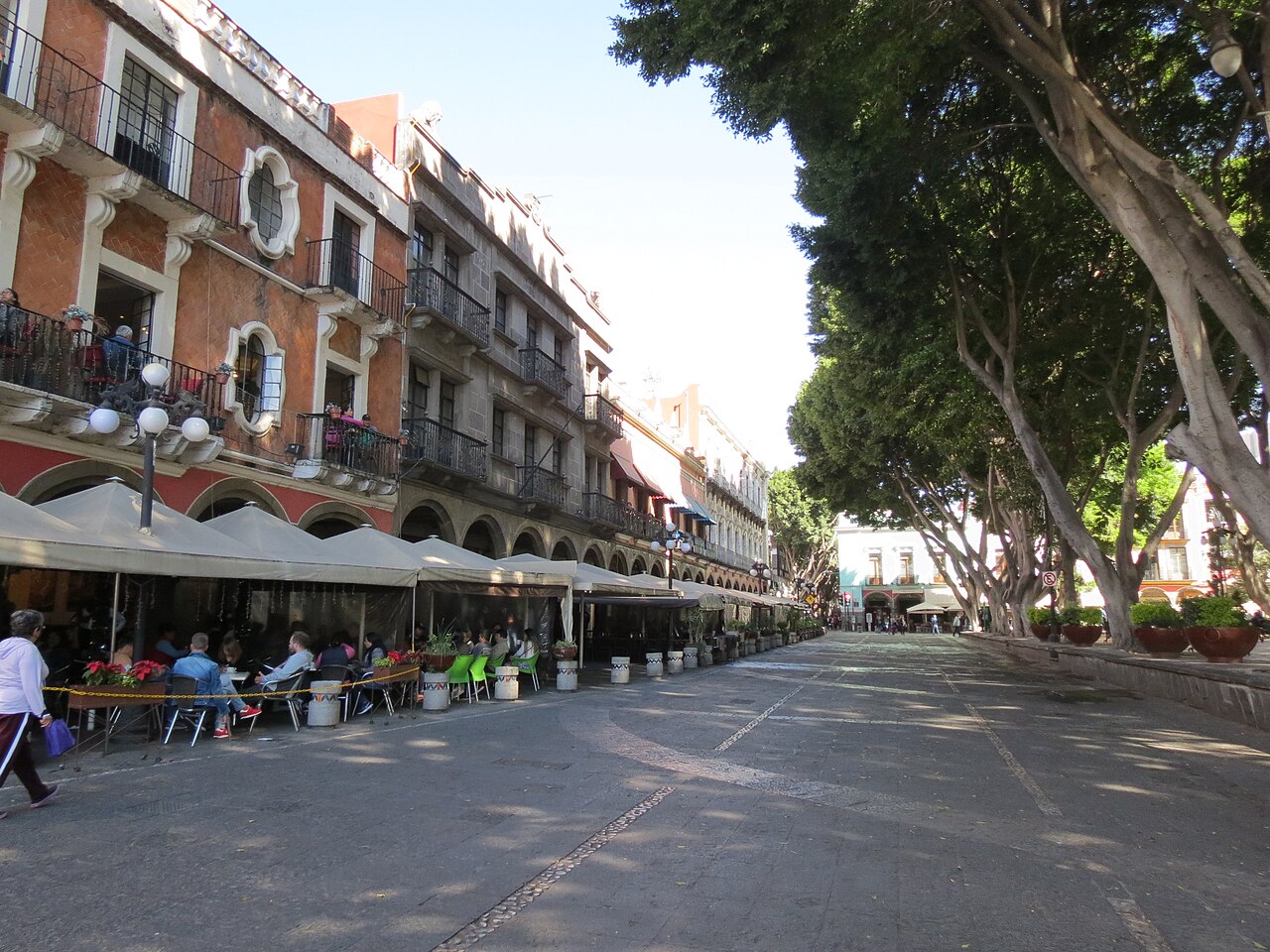
Use the Zócalo as an orientation point for a compact walk. UNESCO’s description of Puebla’s historic centre highlights the cathedral and buildings with decorative tile façades. Let those details change your pace: compare a roofline or tiled surface, then move on without inventing a story about every house.
Start with public streets and the square. A cathedral interior, museum or workshop is an additional visit with its own access rules. Check hours, services and photography instructions locally before entering. Seeing the building outside is worthwhile, but it is not the same as having visited its collections or religious spaces.
If ceramics interest you, ask a seller who made an object, where it was produced and how to care for it. Attractive decoration alone does not establish certified Talavera provenance. Choose a craft stop you can reach within the centre; a studio visit outside the city needs its own booking and transport plan.
Leave room for the conditions you actually find
Check the day’s weather, wear shoes suited to uneven surfaces and plan somewhere to sit. If rain develops, shorten the walk and use a confirmed indoor stop rather than assuming every museum is open. Keep your return address and connection time available before lunch, especially if you are leaving Puebla that day.
For another food-led city day that keeps neighbourhoods distinct, see our George Town story. Our Port Louis visit similarly pairs appetite with context, without treating different culinary traditions as interchangeable.
Sources and photograph
Checked 13 October 2026: Visit Puebla: gastronomy; seasonal chiles en nogada information; UNESCO: Historic Centre of Puebla. Individual venues, access and menus require fresh checks before travel.
Featured photograph: Puebla’s Zócalo, photographed 2 January 2022 by Luis Alvaz, via Wikimedia Commons, CC BY-SA 4.0. Archival scene; Commons resizing and responsive cropping for display. Any adapted image remains under the same licence.