In Santa Fe, an art day can become a collection of addresses before you have really looked at anything. The better starting point is a question: do you want to meet contemporary Indigenous artists through a museum’s interpretation, look at New Mexico art in a historic building, or follow an unexpected work into a gallery? Choose one substantial museum, then give the rest of the day permission to stay small.
This is inspiration for a cultural day, not a promise of a particular exhibition or an attempt to fit every art district into an afternoon. A room that changes how you see a material can be a better memory than five entrances photographed in passing.
Choose the conversation before the museum
The IAIA Museum of Contemporary Native Arts, at 108 Cathedral Place, makes contemporary Indigenous art the focus. Begin here if you want living artists, individual voices and the questions their work raises to lead the day. Do not arrive expecting one timeless category called “Native art”. Read each artist’s name, community identification where provided, date and chosen medium before deciding what the work means.
A useful looking exercise is to choose two works that seem different and ask what makes each contemporary. Is it the material, the subject, a relationship with an older practice, or the way it addresses its audience? Your first answer may change after reading the interpretation. Let that revision be part of the visit rather than a reason to hurry onward.
The New Mexico Museum of Art offers a different choice. Its Plaza Building is at 107 West Palace Avenue; its Vladem Contemporary is at 404 Montezuma Street in the Railyard Arts District. These are two locations, not two names for the same entrance. Decide which building and current programme interest you before arranging your arrival.
Use the hours to protect your looking time
As checked on 9 October 2026, MoCNA lists Monday and Wednesday–Saturday hours of 10am–5pm, with last admission at 4:15pm; Sunday is 11am–4pm, last admission 3:15pm. Tuesday is not listed as an open day. General admission is $10, and Fridays are currently free for all guests. Check the museum directly for exceptions and the exhibition you actually want to see.
The New Mexico Museum of Art currently lists May–October hours of 10am–5pm daily, extended to 7pm on Fridays at both locations. One $12 general-admission ticket covers both buildings; concessions and special-event charges can differ. Its winter schedule changes, so do not carry October’s daily opening into a later-season trip. A ticket covering two buildings is an option, not an instruction to visit both.
Leave an arrival margin and a proper lunch break. Ask about access, seating and photography rules if these affect your visit. Do not spend the museum’s last hour checking another venue’s directions on your phone: make the next decision outside, once you have finished looking.
Follow one gallery area, not the whole city
Tourism Santa Fe’s Canyon Road guide describes a roughly half-mile gallery stretch. It is a useful second chapter if you want to move from museum interpretation to a more individual encounter with work for sale. Select a short section and a few open galleries, rather than treating the number of galleries as a target.
Ask a gallery what is currently on view and whether the artist’s statement is available. Compare one thing with your museum visit: the handling of colour, the scale of a piece or the way it occupies a room. You can be interested without being a buyer. Follow the gallery’s photography policy, keep clear of delicate work and do not assume an open courtyard is permission to enter every adjoining space.
If you chose Vladem Contemporary, staying with the Railyard area can make more sense than adding Canyon Road as well. Downtown, Canyon Road, the Railyard and Museum Hill are distinct planning choices. Check your exact route and transport needs; do not turn their appearance on one visitor map into a claim that every transfer is a comfortable walk.
Keep artists separate from souvenir labels
When browsing, ask who made a piece and how the seller knows its provenance. An artist’s name, material and account of the work are more useful than a vague claim that something is “authentic”. Neither a regional motif nor a shop’s location tells you who made an object. If attribution matters to a purchase, request clear written information and take time to consider it.
Do not ask an artist to speak for every Indigenous community or interpret a practice they have not chosen to discuss. Contemporary work is not obliged to look like a visitor’s idea of tradition. Let people describe their own work, and treat a conversation as a conversation—not automatic permission for a portrait or a recorded interview.
- Read the maker’s name before the price or broad style label.
- Ask before photographing art, artists or other visitors.
- Keep shopping decisions separate from the wish to complete a sightseeing list.
- Leave time to revisit one work that stayed with you.
End with something worth remembering
Take a pause and write down a work, an artist or a question you would like to follow up. You need not buy anything to bring a meaningful part of the day home. If the weather makes outdoor browsing uncomfortable, shorten the gallery section; if a museum is closed, choose another verified open venue rather than pretending an exterior view replaces its collection.
Our Edinburgh literary wander uses a similar small-scale approach: one cultural anchor, then streets that give it context. In Santa Fe, the best art day may be the one that leaves you with fewer addresses and a more precise curiosity.
Sources and photograph
Venue addresses, published visiting arrangements and district context checked 9 October 2026 against IAIA, the New Mexico Museum of Art and Tourism Santa Fe, linked above. Recheck programmes, admission and closures before travel. Looking exercises and pacing are editorial suggestions; no festival, tour or current exhibition is promised.
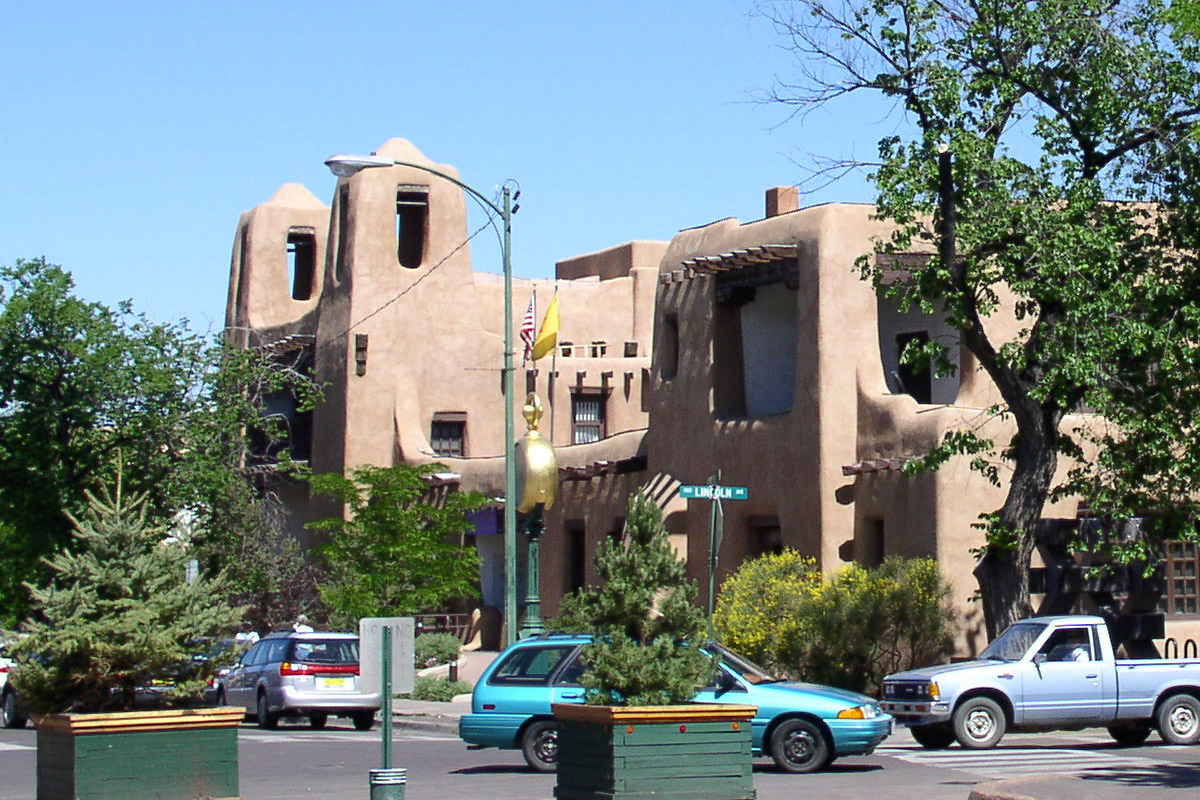
Featured photograph: the New Mexico Museum of Art’s historic exterior, photographed 26 July 2011 by Khlnmusa, via Wikimedia Commons, CC BY-SA 3.0. An archival photograph, not a view of today’s programme, traffic or weather. Original photograph; display resizing or cropping where needed, with derivatives under the same licence.
