Edinburgh’s literary life becomes more interesting when you stop collecting famous names and begin looking for the small things: a desk, a printed page, a sentence beneath your shoes. A compact visit around the Writers’ Museum gives you that change of scale without turning the Old Town into an all-day treasure hunt.
Make Lady Stair’s Close your centre of gravity. Step off the Lawnmarket, spend time inside the museum, read a little of the courtyard and return to the street with one writer you want to know better. In autumn, that modest shape also leaves you room to respond to the weather.
Start with a question, not a reading list
You do not need to arrive having read the collected works of Robert Burns, Sir Walter Scott and Robert Louis Stevenson. These are the three writers celebrated by the Writers’ Museum, but a first visit can begin with a simpler question: what does a writer’s working life look like when the books are not the only things on display?
Choose a thread before entering. Perhaps you are interested in the physical business of making a book, or how personal belongings acquire meaning after someone becomes famous. That gives the objects a job to do. It also saves you from feeling you must absorb every label in equal detail.
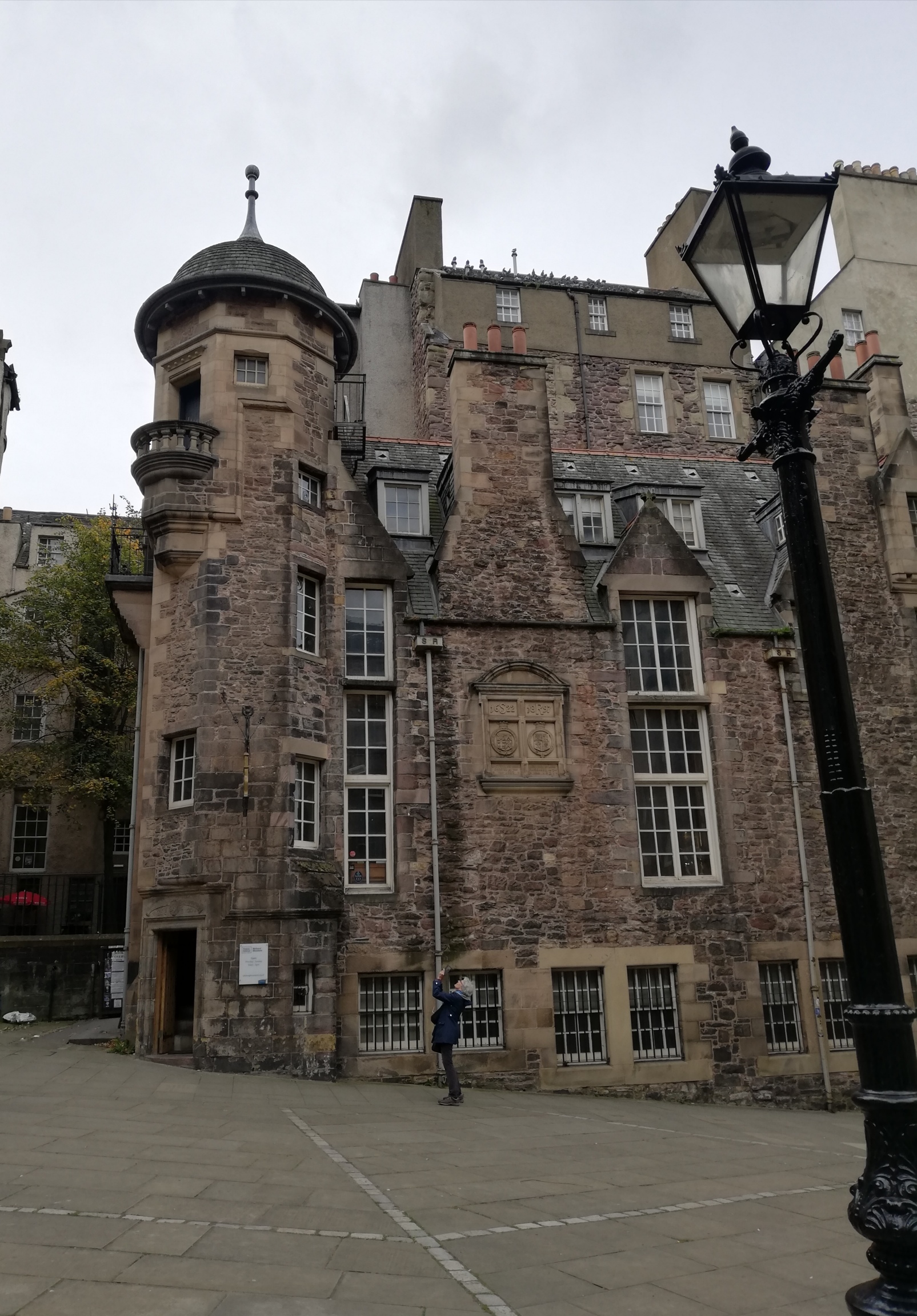
The museum occupies Lady Stair’s House, a seventeenth-century townhouse in Lady Stair’s Close, just off the Lawnmarket section of the Royal Mile. Use the venue sign to find the entrance; not every inviting doorway in the Old Town is a public passage.
Let one object carry the visit
The operator lists Burns’ writing desk and the printing press associated with Scott’s Waverley novels among its highlights. A desk invites you to think about a private act; a press introduces the people and machinery needed to turn that act into something readers could hold.
Rather than racing from one celebrated possession to another, try this:
- Choose one object and read its label carefully.
- Ask what it tells you about work, travel or the making of a reputation.
- Find a second object that changes, rather than merely repeats, your first impression.
- Note one title or question to follow up later. You do not have to buy a book to make the visit count.
This is a way of looking, not a prescribed circuit through particular rooms. Displays and access arrangements may change. Ask staff where the object you are interested in can currently be seen, and do not assume that a historic townhouse offers step-free access throughout. Contact the operator before visiting if stairs, narrow spaces or mobility requirements affect your plans.
Read the courtyard before leaving
Outside the museum, Makars’ Court carries literary inscriptions in its paving. The City of Edinburgh’s collection record describes texts in English, Scots, Gaelic and Latin. That is a useful reminder that Scottish writing is not one voice, one language or three permanently fixed names.
Look for a line that catches your attention, then notice the writer’s name. Let unfamiliarity be a reason to make a note rather than a reason to move on. The courtyard works well as a brief outdoor continuation of the museum, not a test of how many quotations you recognise.
Keep an eye on where you stand while reading. Other visitors need to reach the entrance, and wet paving deserves more attention than a photograph does. There is no need to kneel over every inscription or block a doorway for a perfect shot.
Give the nearby closes a small, respectful role
Return to the Lawnmarket and make the surrounding street your final chapter. Look at the close entrances from the public route and choose, at most, another clearly public passage if conditions suit. Check signs, avoid private courtyards and do not turn residential windows into subjects for intrusive photographs.
You can enjoy the contrast between the main street and a close without following every staircase to see where it ends. This is not a route that requires a castle visit, a descent to the lower Old Town or a climb to a skyline viewpoint. The useful constraint is staying near the museum until you decide you genuinely want more.
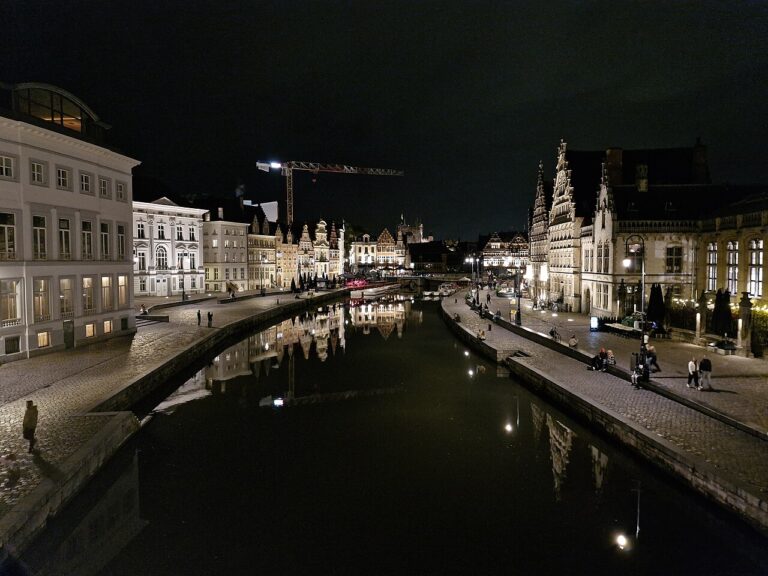
For a different city whose atmosphere rewards a similarly narrow focus, our Ghent evening guide follows canals and light rather than trying to gather every landmark into one outing.
Put the museum first when the weather turns
As checked on 7 October 2026, Culture Edinburgh lists the Writers’ Museum as free, open daily from 10am to 5pm, with last entry at 4:30pm. Recheck the current venue page before leaving. Arriving near last entry gives you less room to linger, so plan the museum as the anchor rather than the final thing you hope to squeeze in.
If rain is persistent, go inside first and leave the courtyard for a short look afterwards if it eases. If the venue is unexpectedly closed, do not swap in another museum on the assumption it must be open: check that operator’s current information, or settle into an open café with the reading note you brought. On a clear day, reverse the order only if you still have a comfortable margin before closing.
Leave with one new author, one object you remember and enough energy for the rest of Edinburgh. That is a fuller literary encounter than a long list of addresses you scarcely looked at.
Sources and photograph
Venue location, collections and opening information checked 7 October 2026 against Culture Edinburgh; courtyard context checked against the City of Edinburgh Council’s Capital Collections, both linked above. Opening hours and displays can change.
Featured photograph: Lady Stair’s House, home of the Writers’ Museum, photographed 1 October 2018 by Suonii180, via Wikimedia Commons. CC0 1.0. Illustrative historical photograph; resized or cropped for display where needed.