Ghent makes sense after dark because the lighting has been designed as part of the city rather than added as decoration. The official Light Plan links façades, bridges, streets and water, but it works best as a thread, not a checklist. You are allowed to stop at a reflection, warm up in a café or abandon a detour because the evening feels complete.
On Thursday 1 October 2026 there is an extra choice: the first Thursday of the month is a late-opening night for participating Ghent museums, with doors open until 22:00. That creates two good versions of the same evening.
Choose the evening before choosing the route
Museum first: select one participating museum whose current programme genuinely interests you, reserve anything that requires booking, then use a shortened central section of the Light Plan afterward. Do not try to fit a museum and every lit landmark into one night.
Full light walk: begin early enough to enjoy the centre without racing. Visit Gent describes the basic route as 3.2 kilometres, about 4,300 steps, and encourages walkers to add or remove detours. The city’s atmospheric and monument lighting generally gives way to functional lighting at midnight, so treat midnight as a change in mood, not a finishing-line challenge.
Start at Kouter, but do not worship the map
The official route begins around Kouter and Handelsbeurs, a useful place to settle into the city before the medieval core. From there, Mageleinstraat draws you toward the cluster of St Nicholas’ Church, the Belfry, the Cloth Hall and St Bavo’s Cathedral. The density of landmarks is precisely why slowing down works: several centuries can sit in one field of view.
Use the official map for orientation, then let street closures, weather and your own energy decide the exact line. A missed numbered stop is not a failed walk.
Let three views anchor the night
- The Belfry axis: pause where the civic and religious towers overlap rather than photographing each building separately.
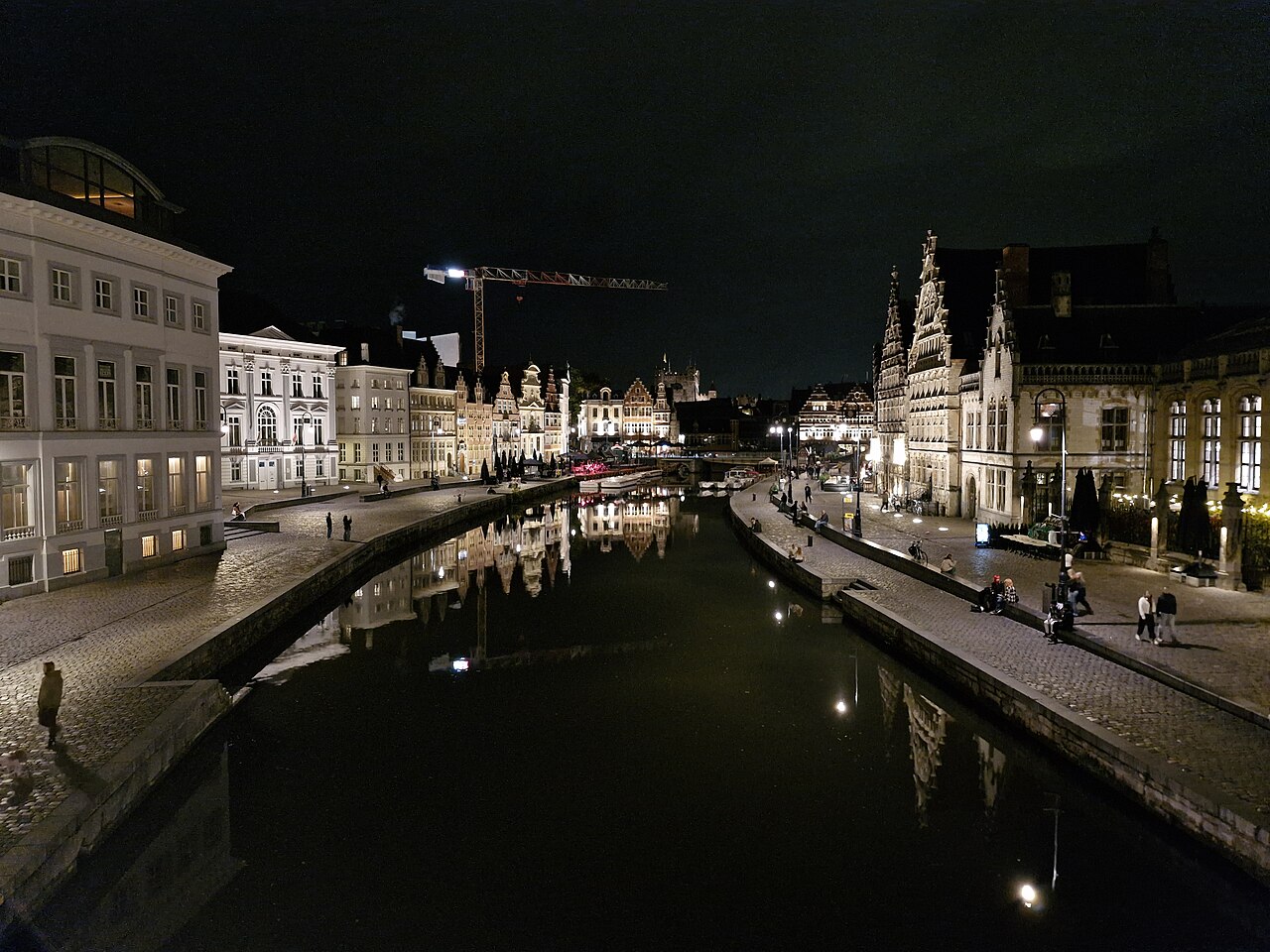
- Graslei and Korenlei: cross toward St Michael’s Bridge and look back along both quays. Calm water can double the architecture; wind and rain produce a different, equally honest scene.
- Sint-Veerleplein and the Castle of the Counts: use the square as a decision point. Continue toward Kraanlei and Vrijdagmarkt if you still want distance, or close the loop when your attention starts to thin.
These anchors turn the route into an evening with shape. They also make it easy to cut the walk short without losing its character.
Build one rain-and-fatigue pivot
Ghent’s reflections become more dramatic in rain, but wet paving and cold hands can drain the pleasure from a long route. If the forecast is poor, make the museum the main event and the lights the coda. If the museum is not for you, choose a café or cultural venue near the central route before you start; it is easier to use a planned refuge than to search for one when tired.
Wear shoes that tolerate slick stone, keep the camera under cover between stops and accept that some of the best night views are simply watched. The aim is not a complete photo inventory.
Check the journey home while you still have options
Ghent’s buses and trams run into the evening, but routes and service patterns can change. Check De Lijn’s live journey planner before setting out and again before the final stop. Save the route to your accommodation, note a central stop that still works if you shorten the walk, and do not build the plan around a last connection you have not verified.
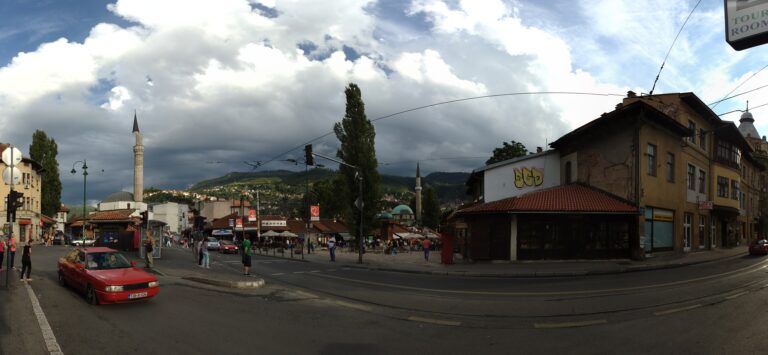
If you enjoy cities that reveal themselves through both galleries and streets, pair this evening with our one-day route through Sarajevo’s overlapping eras. In Ghent, however, let darkness do some of the editing: one museum, three views and a slow walk can be enough.
Sources and image credit
Practical information checked 1 October 2026. Sources: Visit Gent’s official “Magical Ghent in the evening” Light Plan route; its Late Thursdays programme; and current travel information from De Lijn. Recheck participating museums, activities and transport on the day.
Featured photograph: Graslei and Korenlei at night from St Michael’s Bridge, by Daniuu, licensed under CC BY-SA 4.0, via Wikimedia Commons.