Autumn arrives in Québec City as a sequence, not an appointment. A maple on the Plains of Abraham may be blazing while a sheltered street in Old Québec is still mostly green; a clear morning can become a wet, windier afternoon. The useful plan is therefore not “see peak colour on Tuesday.” It is a compact city day with several good versions.
Choose one outdoor priority
Start by deciding what would make the day feel complete. It might be the skyline from Dufferin Terrace, a long walk on the Plains of Abraham or an excursion beyond the centre. Make only one of those the anchor. Everything else should be close enough to shorten, move or replace.
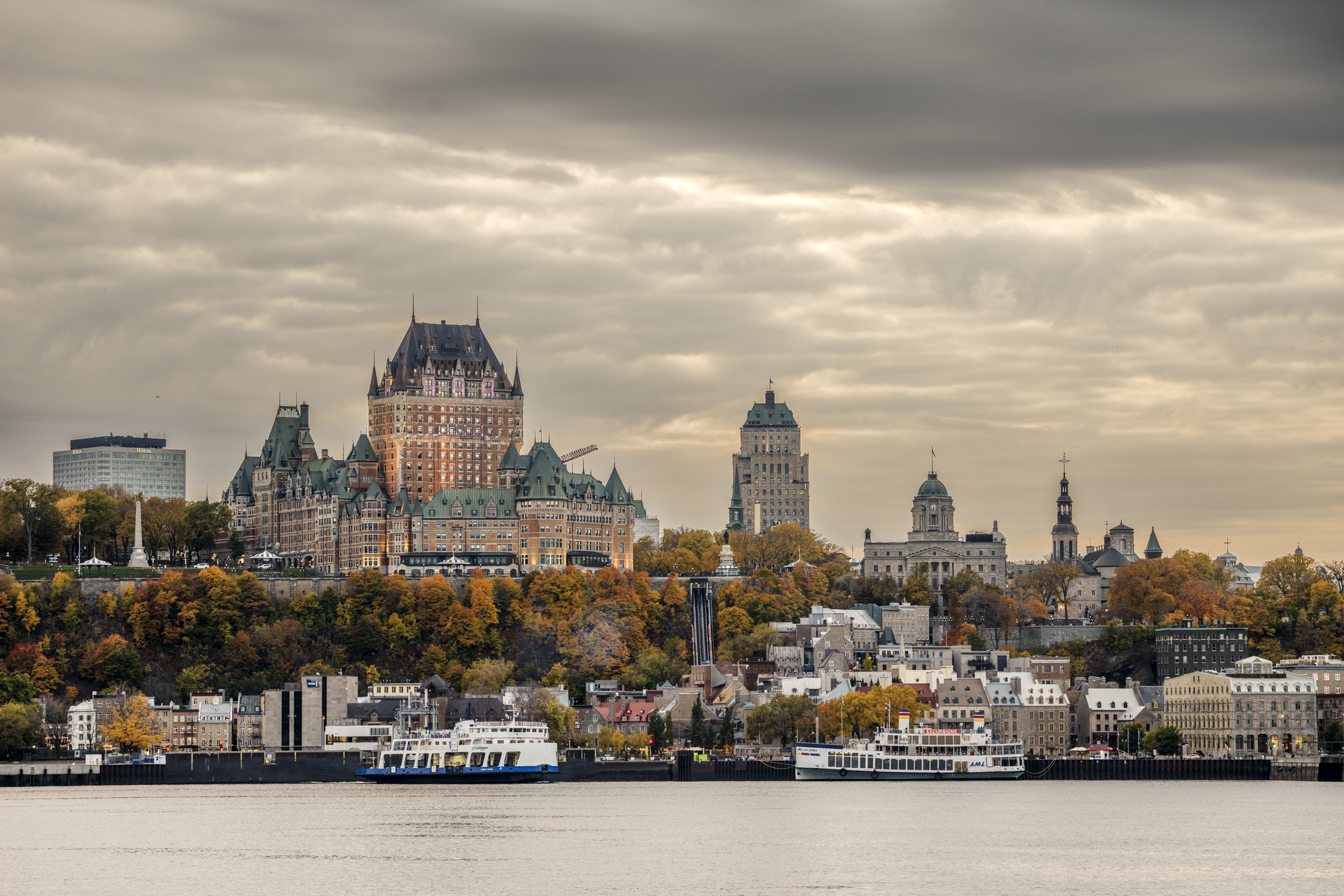
Official Québec City guidance describes September as a transition month: cooler mornings and evenings, meaningful rain and foliage beginning earlier in the surrounding region than in the city. That is a planning cue, not a promise. Check the local forecast and the province’s fall-colour map close to the day, then dress for the conditions you actually have.
A city loop that works in mixed weather
On a dry morning, begin inside the walls of Old Québec before the busiest part of the day. Walk toward Dufferin Terrace for river views, then choose either the upper-town streets or the descent toward Petit-Champlain and Place-Royale. Wet cobbles and stairs can be slippery, so use the funicular or reverse the route if the surface, mobility or energy level calls for it.
After lunch, continue west toward Parliament Hill and the Plains of Abraham. The park’s paths, open lawns and mature trees give the day breathing room without requiring a car. A shorter version can focus on the eastern edge and Joan of Arc Garden; a longer version can carry on toward the art museum and Montcalm.
The three-layer plan: one outdoor anchor, one nearby indoor refuge and one optional extension. If the weather changes, remove the extension first—not the whole day.
Keep the colour chase optional
If the forecast is stable and the foliage map shows stronger colour outside town, consider a half-day beyond the centre. But make that decision late enough to use current information. A fixed, prepaid sequence of distant viewpoints can turn a beautiful season into a schedule of windshields and parking lots.
For an urban alternative, stay with neighbourhood-scale colour: the Plains, tree-lined streets around Montcalm, or a river walk. These options are easier to shorten and leave more time for cafés, markets and the city’s everyday rhythm.
What to carry in early autumn
- A light waterproof shell rather than a heavy single layer.
- A warm layer for the morning and the riverfront.
- Shoes with grip for slopes, steps and wet stone.
- A small dry bag or zip pouch for phone, map and tickets.
- A refillable bottle and a little spare capacity in the day bag for removed layers.
Rain is a route edit, not a lost day
If steady rain arrives, compress the exposed sections and use the city’s museums, historic interiors and long lunch options as deliberate parts of the day. Keep one short walk for the clearest window instead of repeatedly setting out and retreating. The same shoulder-season logic applies elsewhere: our Lake Bled planning guide also starts with daylight, conditions and one satisfying priority.
Autumn colour is the atmosphere, not the assignment. Québec City still works when the trees are early, late or half-turned—provided the plan leaves room for the day that turns up.
Planning sources: Visit Québec City monthly weather guidance; official fall-foliage guide and colour-map link; official Old Québec overview. Conditions and access can change; verify close to travel.
Image credit: “Chateau Frontenac viewed from Levis in autumn,” Wilfredor, CC0 1.0, via Wikimedia Commons. Resized by Wikimedia for web use; no editorial alteration.