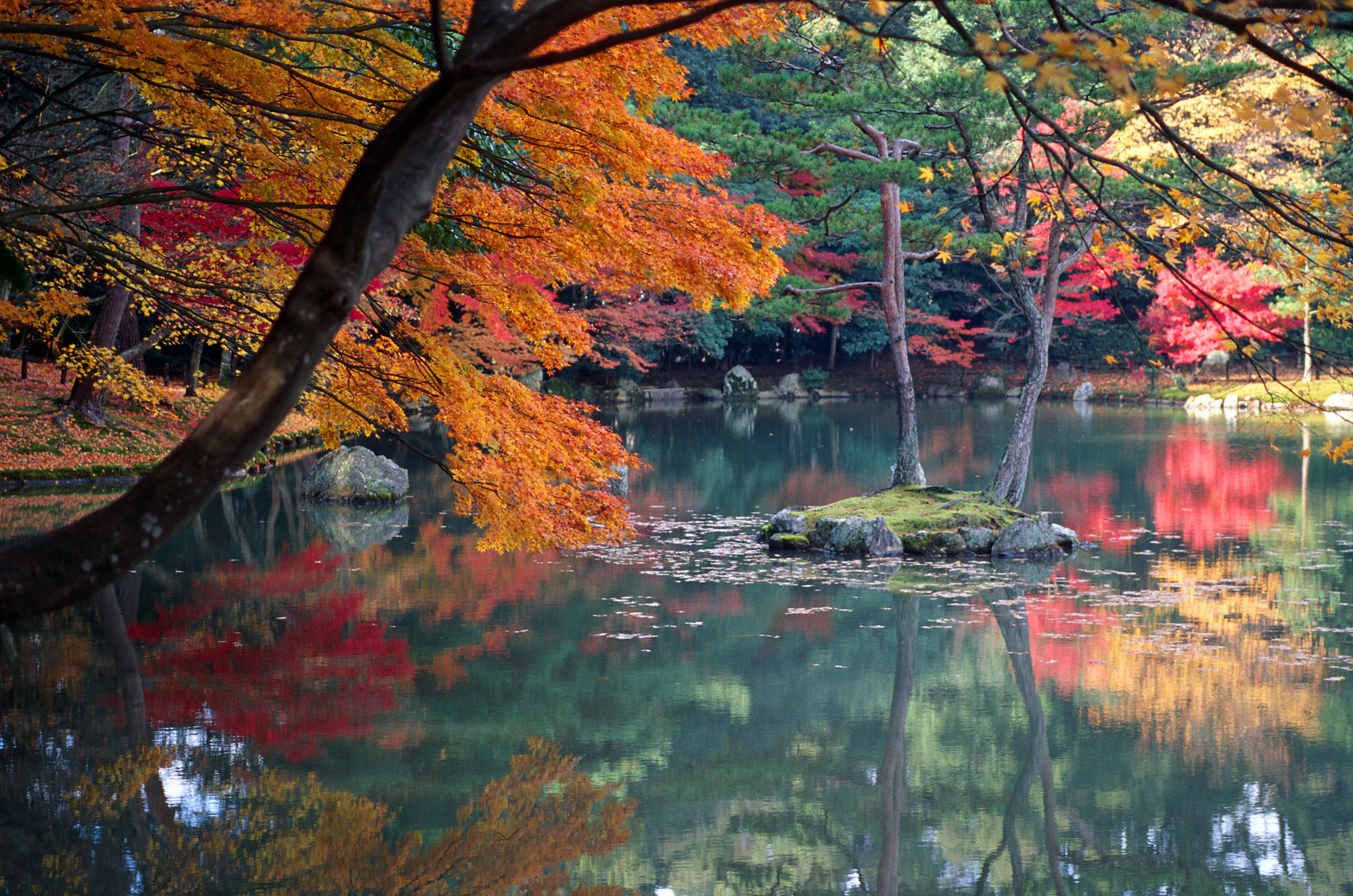
Kyoto’s autumn colour is worth travelling for, but the season also concentrates visitors onto the same buses, platforms and temple approaches. A better plan does not depend on finding an empty Kyoto. It uses rail for the long hops, saves buses for the final stretch and leaves enough space to change direction when a district is visibly overwhelmed.
Start with the city’s own transport advice
Kyoto City’s official travel guide recommends combining trains and buses rather than treating the bus network as the default for every journey. The two municipal subway lines cover useful north–south and east–west corridors, while JR and private railways reach several sightseeing districts without passing through the busiest bus stops.
The same guidance suggests travelling to the station closest to your destination instead of automatically changing at Kyoto Station. Examples include JR Nijo for Nijo Castle, Tofukuji for a transfer to the Keihan Line towards Gion and Kiyomizu, and Yamashina for the Tozai subway line into Higashiyama.
Build each day around one side of Kyoto
Autumn itineraries become tiring when they zigzag between Arashiyama in the west, Higashiyama in the east and northern temples in a single day. Grouping places geographically reduces transfers and gives you more freedom to linger.
- Western day: take the JR Sagano Line or Hankyu railway towards Arashiyama, then explore on foot before returning by rail.
- Eastern day: use the Keihan Line or Tozai subway to reach Higashiyama, then walk a coherent section rather than chasing every headline temple.
- Central day: connect Nijo Castle, the palace area and downtown by subway, with short walks between neighbourhood stops.
A useful rule
Ride a train as close as practical, take a bus only for the final leg if needed, and walk the last section. That is also the three-step approach promoted by Kyoto’s official autumn guidance.
Use timing as a flexible tool
Moving a popular stop earlier or later can help, but sunrise alarms are not the only answer. Kyoto’s official congestion forecast compares expected crowd levels by place and time. Check it while planning and again during the trip; if one area is peaking, switch to a garden, museum or neighbourhood walk that is easier to enjoy at that moment.
Autumn colour also moves through the city rather than arriving everywhere at once. Use the official foliage calendar as a guide, not a promise, and choose places that interest you even if the leaves are a week before or after their most vivid point.
Travel light through stations and streets
Large luggage makes crowded buses and narrow pavements harder for everyone. Kyoto’s tourism office points visitors towards lockers and delivery services around Kyoto Station through Hands Free Kyoto. If you are changing hotels, send the main bag ahead or leave it securely before sightseeing instead of carrying it to temples.
Treat lived-in districts as neighbourhoods
Gion is not an outdoor studio set. Official visitor guidance asks travellers not to enter private property, block streets, photograph geiko or maiko without permission, or walk in groups that obstruct traffic. Keep voices low near homes, follow local signs and remember that a quieter side lane may be private rather than undiscovered.
What to check before setting out
- Live congestion information for your chosen district.
- The current rail and bus route, including any seasonal timetable.
- Opening and last-entry times on each temple or museum’s official site.
- Whether a one-day pass suits your actual route rather than an imagined number of rides.
- A dry-weather and wet-weather alternative in the same part of the city.
For broader context, read Japan beyond the obvious and continue through the Kyoto destination collection.
Planning sources
Transport and etiquette details were checked against the Kyoto City Official Travel Guide, its visitor guidelines and the official congestion forecast on 14 September 2026. Photograph: Fg2 via Wikimedia Commons, released into the public domain; resized by WordPress.
