Kyoto’s food markets reward attention, but a narrow arcade stops working when every snack becomes a group meeting. The simplest etiquette is also the most useful: notice how the shop operates, make room before deciding and eat only where the vendor says it is appropriate.
Nishiki Market is a 400-metre shopping street between Teramachi and Takakura, according to the Kyoto City Official Travel Guide. It is a collection of individual businesses, not one restaurant with a single service rule. Read each shop’s signs and directions rather than applying one habit everywhere.
Look before joining the queue
Pause where you are not obstructing the aisle and work out what is being sold, how to order and where customers receive food. Keep your group compact. If one person is buying, the whole group does not need to form a wall in front of the display.
Have payment ready and order a manageable amount. Buying one item, eating it correctly and then deciding what comes next is more considerate than collecting several hot or fragile foods while other customers wait.
If a queue bends into the walking space, follow the shop’s arrangement rather than inventing a second line. Doorways, neighbouring displays and delivery access need to remain clear even when a popular item is close by.
Do not eat while walking
Kyoto’s official guidance is direct: do not eat as you walk through Nishiki Market. Eat at the shop or take the food home. If a business provides an eating area, use it; if not, ask where the item may be consumed before opening it.
“Stepping aside” does not mean standing in front of the next shop. Do not use a neighbouring storefront, shrine entrance or residential threshold as an improvised dining space. If there is no suitable place, choose something packaged for later.
Return skewers, cups and wrappers to the selling shop when it provides a bin or tells you where they belong. Kyoto’s responsible-travel guidance asks visitors not to litter or block roads. Carrying a small waste bag is useful, but it does not override local sorting or shop instructions.
Ask before photographing people or interiors
A colourful display is not automatic permission to photograph a vendor, customer or working area. Look for signs and ask when the answer is unclear. Keep the phone away while ordering so the exchange does not become a performance that delays the queue.
When photography is allowed, take the image quickly and move on. Do not lean over food, reach behind a counter or stage a group portrait in the aisle. Some places restrict photography even when food is on public view; the city’s detailed visitor guidance explains why signs and individual shop rules matter.
Visit as a customer, not a checklist
Food-market travel can become a race through “must-try” items. A better approach is to choose a few stalls that genuinely interest you, ask concise questions when staff have time and accept that not every product needs a photograph or purchase.
Be especially careful with allergies and dietary restrictions. Ask the shop about the specific item, but do not assume a busy vendor can guarantee the absence of cross-contact. If the answer is uncertain, choose something else.
Market rhythm
Look from the side, queue without widening the line, order, move to the place the shop designates, finish, dispose of waste correctly—and only then choose the next stop.
Nishiki fits most comfortably inside a geographically sensible day. Our two-day Kyoto itinerary and autumn transport plan help avoid unnecessary cross-city travel.
Planning sources checked 19 September 2026. Recheck individual shop information, signs and current city guidance during your visit.
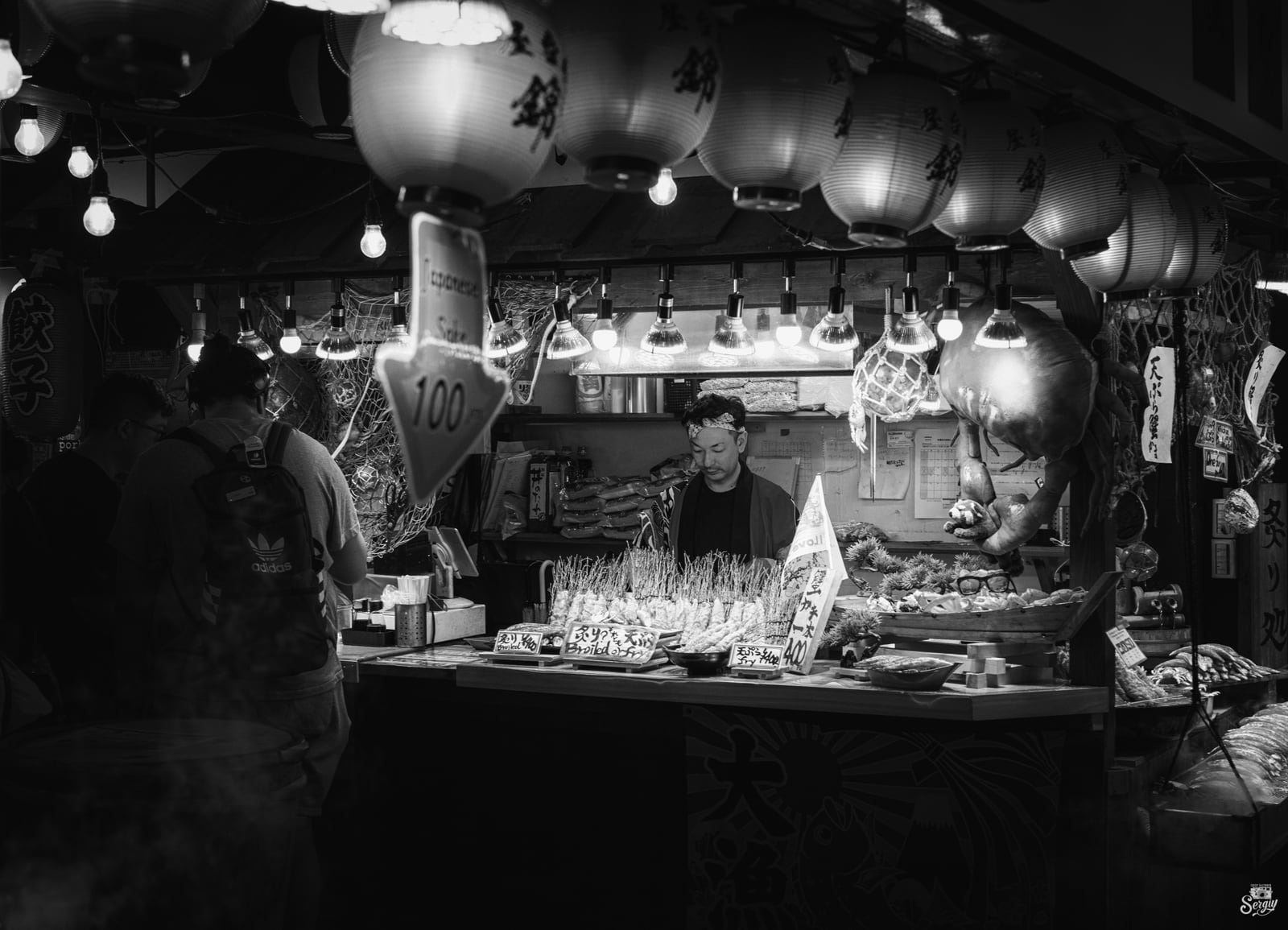
Featured photograph: a food stall inside Nishiki Market, Kyoto, photographed 8 July 2024 by Sergiy Galyonkin, via Wikimedia Commons, CC BY-SA 2.0. Resized and compressed; display crops may apply.