Two days in Kyoto are enough for a rewarding first encounter, but only if the plan respects the city’s geography. The common mistake is to bounce from Arashiyama in the west to Higashiyama in the east and Fushimi in the south on the same day. This itinerary groups nearby places, uses rail for the long moves and leaves room for one unplanned discovery.
How this two-day plan works
Day one stays largely in eastern and southern Kyoto, pairing Fushimi Inari with Higashiyama and Gion. Day two moves west to Arashiyama, then returns to central Kyoto for Nijo Castle or the palace area. The sequence can be reversed to match weather, opening days or your accommodation.
Do less, see more: choose one major temple or garden in each half-day and treat the streets between them as part of the visit.
Day one morning: Fushimi Inari without a race
Take the JR Nara Line from Kyoto Station to Inari or use the Keihan Line to Fushimi-Inari, depending on your starting point. The shrine grounds extend far beyond the famous first rows of vermilion gates. Walk only as high as your time and energy justify; the full mountain circuit is not essential to appreciate the place.
An early start can mean cooler air and more space, but respectful behaviour matters at every hour. Keep entrances clear, do not stage long photo sessions in narrow sections and remember that this remains an active shrine.
Day one afternoon: move north through Higashiyama
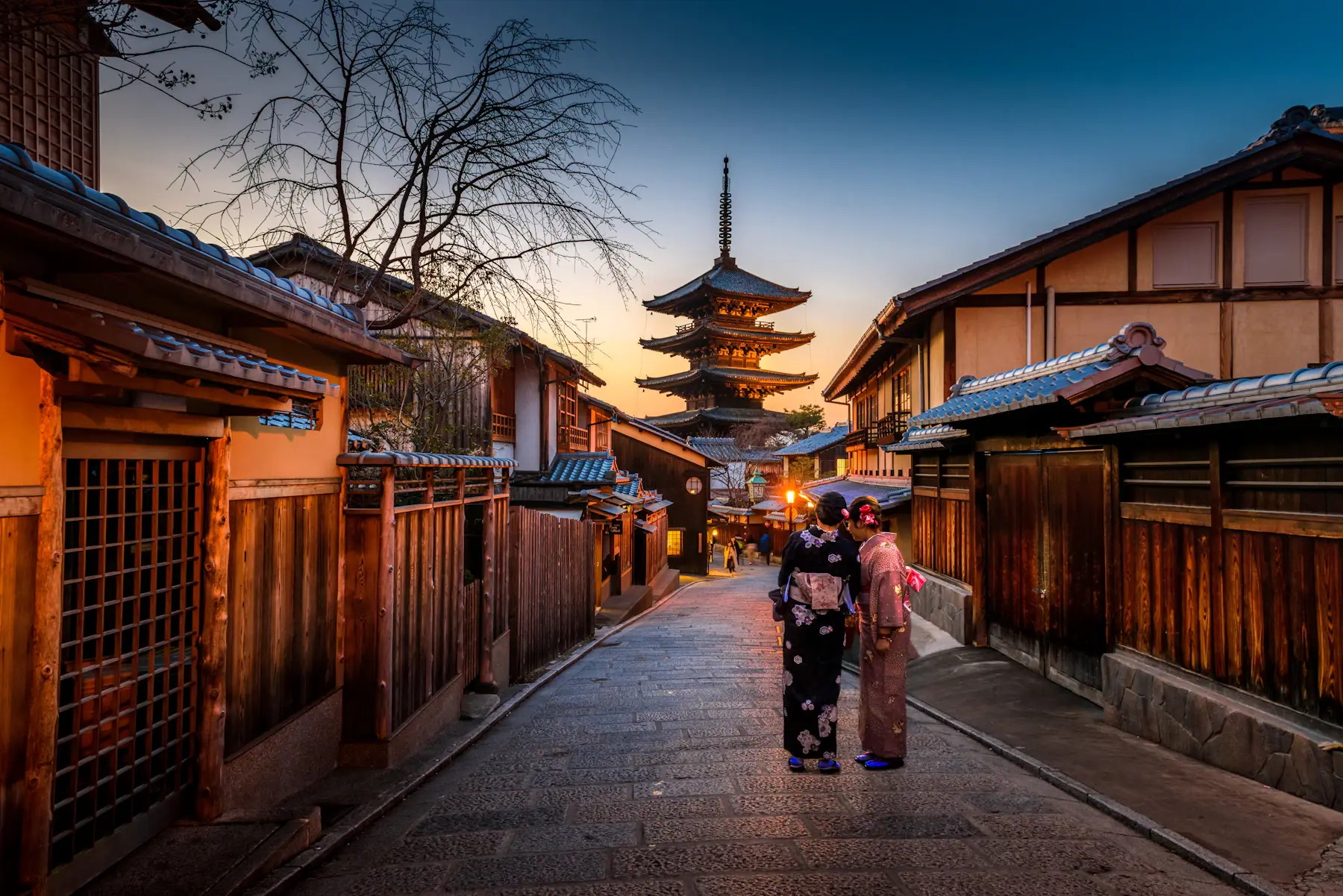
Return by Keihan railway towards Kiyomizu-Gojo or Gion-Shijo rather than routing back through Kyoto Station. Pick a coherent walking line: Kiyomizu-dera and the preserved slopes, then Yasaka Shrine and Gion, or a quieter alternative around Sanjusangen-do and the museum area.
Kyoto’s official transport guidance recommends taking rail close to the destination and using buses only for the final leg. For Kiyomizu and Gion, it specifically suggests changing from JR at Tofukuji to the Keihan Line. On weekdays, the new Kiyomizu-dera sightseeing shuttle introduced in July 2026 is another option from Kyoto and Keihan Shichijo stations; confirm the current timetable before relying on it.
Day one evening: stay in the same quarter
Finish near Gion, Kawaramachi or Pontocho instead of adding another distant sight. Choose dinner on a street where stopping will not block the flow of people, and avoid photographing geiko or maiko without permission. If energy is low, a riverside walk is a better final hour than one more rushed admission.
Day two morning: Arashiyama by rail
Use the JR Sagano Line, Hankyu Railway or Randen according to your accommodation and first stop. Begin with one anchor: Tenryu-ji, the riverside area or a quieter temple north of the bamboo grove. The grove is a short public path, not a half-day attraction, so build the morning around the wider district.
Kyoto’s official guide estimates about 25 minutes from Kyoto Station to the Saga/Arashiyama area. Allow longer for the walk, queues and the temptation to stop. If the central streets are crowded, move away from the main bridge and shopping strip rather than waiting for an empty photograph.
Day two afternoon: choose one central anchor
Return towards central Kyoto and choose either Nijo Castle, the Imperial Palace area or downtown markets and museums. Nijo works especially neatly by taking the JR Sagano Line to Nijo and changing to the Tozai subway for Nijojo-mae, a route highlighted by the official tourism guide.
If shopping or food is the priority, continue towards Shijo and Kawaramachi. Nishiki Market is best treated as a working market: keep moving, follow individual stall rules and eat where vendors indicate rather than stopping in the aisle.
Tickets, luggage and realistic timing
- Use an IC card for flexibility unless the cost of your actual journeys clearly justifies a day pass.
- The Subway & Bus 1-Day Pass is ¥1,100 for adults in 2026 and covers the municipal subway and participating bus networks, with exclusions.
- Send large luggage ahead or use a station locker so crowded platforms and narrow streets remain manageable.
- Check last admission on official attraction websites; closing time and last entry are not the same.
- Keep one indoor alternative in the same district for heat or rain.
What to leave for another visit
Kinkaku-ji, Kurama, Kibune, Ohara and Uji are all worthwhile, but adding them to this plan creates needless crossing or compresses the places already included. Save at least one for a third day. A first visit should establish Kyoto’s scale and rhythm, not complete a checklist.
For the movement strategy behind this route, read Kyoto in autumn without the crush. Continue with Japan beyond the obvious or browse the Kyoto destination collection.
Planning sources
Routes, journey estimates, ticket information and the 2026 Kiyomizu-dera shuttle were checked against the Kyoto City Official Travel Guide, its transport tickets page and sample itineraries on 15 September 2026. Photograph: Unsplash; licensed source details are held in the Travel2Travel media record.