In Algiers’ Casbah, the most useful change of perspective may be to look away from the panorama. Doors, steps, shops and the way buildings meet a slope can tell a different story: this is a neighbourhood with continuing daily uses, as well as a place of architectural importance.
A rewarding visit does not require collecting every landmark. Arrange a good local guide, choose a manageable part of the district and leave room for explanations. The aim is to understand how the old city works, while allowing the people who live and work there to get on with their day.
A historic district that still has residents
UNESCO’s World Heritage account describes an urban fabric shaped by overlapping traditions, with houses, religious buildings, palaces, baths and commercial spaces fitted to steep, irregular ground. Its recognition of the Casbah, inscribed in 1992, rests on more than a skyline: the continuing relationship between buildings and community is part of its significance.
That gives a visitor a useful question: how does the form of a street support the life around it? Ask your guide to explain a building’s purpose or a change in the route. Observe from public space, keep entrances clear and resist treating a doorway or person as an accessory to a photograph.
Start with a local guide and a modest plan
The UK Foreign, Commonwealth and Development Office specifically recommends using a good local guide for a Casbah visit and telling your hosts or hotel your plans. Make those arrangements before setting out. Ask your accommodation to help establish the guide’s identity, language, meeting place, price and what the visit actually includes.
- Discuss terrain: explain your comfort with steps, prolonged standing and uneven surfaces. Ask for a shorter route and a clear finish point if needed.
- Define access: establish which places are public, which require tickets or permission and which are excluded. A guide arrangement does not itself guarantee entry to a palace, mosque, roof terrace or private home.
- Agree practicalities: confirm duration, breaks, cancellation terms, any extra charges and the return transport. Do not rely on an unsolicited offer in the street.
There is no fixed walking circuit here because access, your guide’s advice and individual mobility needs should determine it. A short visit with good interpretation can be more satisfying than an ambitious list that leaves no time to understand what you see.
Let the slope set the pace
The Casbah’s hilly setting is central to its character. It is also a practical consideration. Ask where the steps and difficult sections fall before agreeing a route; a downhill walk can still be demanding. Wear shoes with grip and arrange transport to an agreed meeting point.
For a November visit, check the local forecast on the day. If rain leaves surfaces wet, shorten the walk, change the route with your guide or postpone it. These are planning choices, not a promise about today’s weather or the condition of a particular street. Anyone needing step-free access should seek specific local confirmation rather than assuming a heritage district can supply it throughout.
Photographs come after permission
Ask before photographing people or entering a shop to make images. Accept a refusal without negotiation. A visible staircase or an open door is not an invitation into a dwelling; likewise, a view across rooftops does not establish public rooftop access.
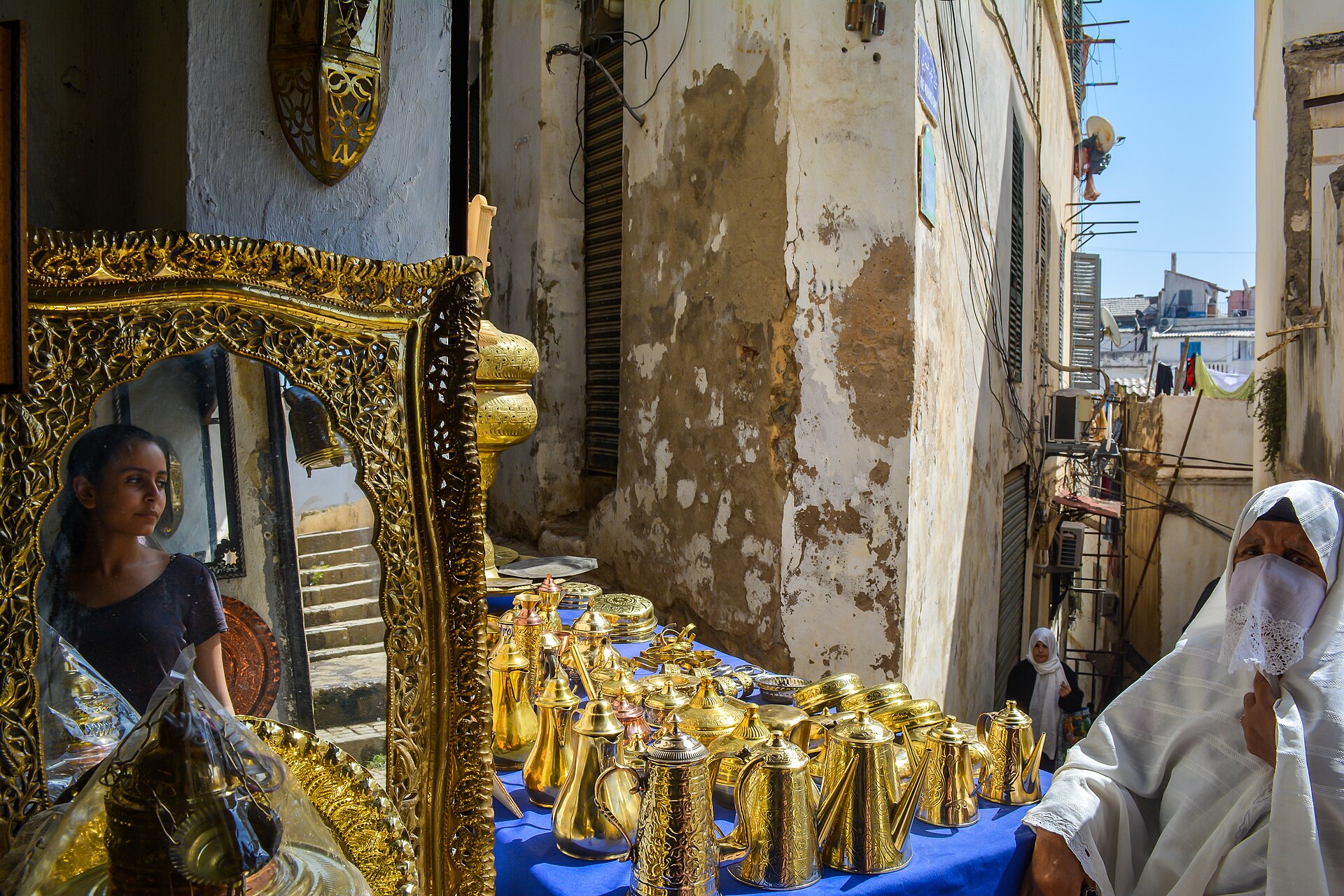
When a shop is open to visitors, a conversation about an object’s material or use may be more revealing than a quick picture. Ask whether an item was made locally and what the seller knows about it, without turning the answer into a claim of authenticity you cannot verify. Leave displays and passages as you found them.
Keep the city visit in its wider context
Before booking, consult current Algeria travel advice, its safety and security guidance and entry requirements for your own nationality. Current FCDO advice includes terrorism and urban-crime concerns as well as regional travel restrictions; avoiding a restricted border area is not a guarantee of safety in the capital. Follow local instructions and keep your hotel informed.
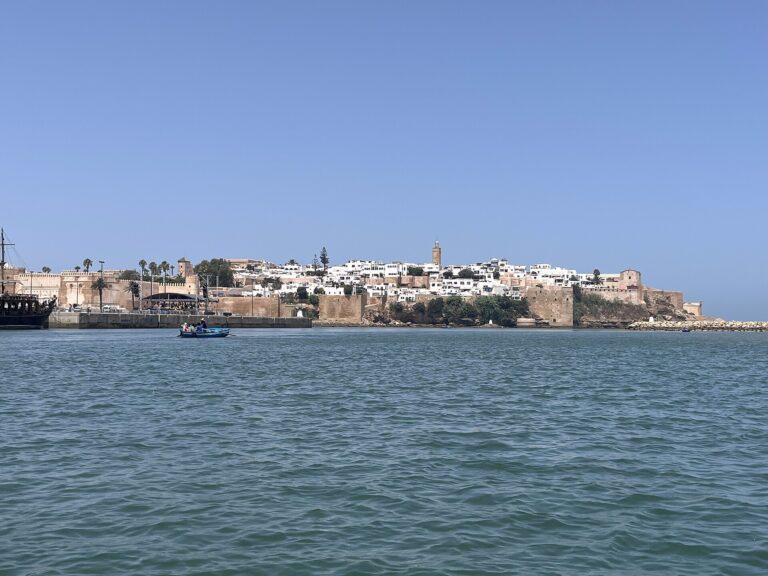
For related reading, our Rabat Oudayas guide considers another historic neighbourhood with continuing everyday life. Our Yogyakarta batik article offers questions for looking more closely at craft and provenance.
Sources and image credit
Checked 5 November 2026: UNESCO: Kasbah of Algiers for heritage context and terrain, and the FCDO pages linked above for current travel guidance. UNESCO’s older residential and management figures are not treated as a present-day census or access notice. This article does not promise a particular monument opening or guided tour; no guide has been booked.
Featured photograph: Casbah of Algiers, the heart of the city, Nour Abdelatif, 4 September 2014, via Wikimedia Commons, CC BY-SA 4.0. The Commons rendition is resized from 6000 × 4000 to 1920 × 1280; the site may crop it responsively. Adaptations remain under CC BY-SA 4.0. The photograph records a past street scene, not current opening, access or weather conditions.