Rabat is easier to understand when you leave room between its landmarks. Start with a limited part of the Kasbah of the Oudayas, look at how its streets meet everyday life, and choose one indoor visit if it interests you. A meal and a pause can do more for the day than another journey across the city.
This guide keeps the focus on the Oudayas and its immediate surroundings. It does not require a tour of every royal-capital monument, an Atlantic swim or an excursion to Chellah.
See a living capital behind the familiar image
UNESCO recognises Rabat as both a modern capital and a historic city. Its World Heritage description brings together older urban fabric and the new town developed during the French Protectorate in the early twentieth century. The city’s significance is wider than any single gate or photographed lane.
Carry that thought into the Oudayas. Look at the change from a substantial entrance to smaller streets and thresholds, rather than searching only for an empty picture of a blue-and-white wall. A doorway may belong to a home, and an apparently quiet lane may still be someone’s route to work.
The Moroccan National Tourist Office highlights the kasbah’s architecture, gardens and connection with the city’s cultural life. Its broad visitor guide is useful background, but it does not establish that every garden gate, café or gallery will be open for your visit.
Choose a short first look through the Oudayas
Begin at a clearly identified public entrance and decide on a simple return point before adding side streets. Give yourself permission to cover a small area. Notice the shape of a doorway, the transition between open space and a narrow passage, or how a shop display sits within an older building.
Keep entrances clear and respect any private or religious threshold. An open door is not permission to enter. Ask before photographing people, especially children, and accept a refusal without negotiation. For buildings connected with government or security, follow restrictions rather than treating every façade as a photographic subject.
If you would like interpretation, arrange a legitimate guide and agree the scope and price beforehand. Current UK travel advice warns about people posing as official guides in historic districts and recommends checking the guide’s official badge and local permission.
Make the museum an optional anchor
The Oudayas National Museum of Adornment offers a way to turn a decorative detail into a question about materials, technique and use. Its operator, the Fondation Nationale des Musées, describes a permanent collection devoted to personal adornment, including Amazigh jewellery, in the kasbah’s historic museum building.
On our 31 October 2026 check, the operator listed opening 10:00–18:00, closed Tuesdays, and admission for foreign visitors at 60 Moroccan dirhams. Confirm the current charge, opening and any change to the galleries before travelling. Those are museum details; they are not the opening hours of the entire kasbah or its gardens.
Choose one display to look at carefully. Ask what the label says about where an object came from, how it was made and how it was worn. Do not use a museum object as a shortcut for judging every item sold elsewhere in the city. If you need a step-free route or seated rest, check the particular arrangements with the museum first; the online description does not verify access to every room.
Leave the garden and water view conditional
The Andalusian-inspired garden is part of the area’s appeal, but keep it as an option subject to its actual gate opening and local directions. A museum’s published timetable is not proof of garden access. If a section is closed, enjoy the public spaces that remain open rather than trying another unmarked entrance.
For a view towards the Bouregreg or the coast, use an open public viewpoint only when conditions are comfortable. Wind, damp paving and an exposed edge can make a short stop sufficient. There is no need to add a beach walk or go down to the water to complete this visit.
Check Morocco’s official weather service and local directions before leaving. If wind, rain or a closure affects the route, choose a suitable indoor visit or leave the exposed section for another day.
Give everyday Rabat some time
Finish with a meal or tea at a business whose menu, opening and seating suit you. Check prices before ordering. If you browse craft or jewellery, ask where the particular item was made and what its materials are; a stall’s location does not guarantee local manufacture.
- With a short window: choose a few public streets and a seated pause, with enough margin for your own onward plans.
- In rain or strong wind: shorten the exposed sections and confirm the museum before making it your main stop.
- With mobility needs: ask about the approach, steps, surfaces and toilets before committing to a route.
- Before leaving: check current travel advice and local news, avoid demonstrations, keep valuables discreet and arrange a practical return journey.
For another city visit that makes the ground beneath your feet part of the plan, read our Colonia del Sacramento itinerary. Our Gdańsk amber guide explores questions to carry from a museum to a maker’s counter.
Sources
Checked 31 October 2026: UNESCO’s Rabat heritage description; the Moroccan National Tourist Office’s city overview and medina guide; the museum operator’s collections, hours and admission; and current UK travel advice. Recheck access, services and local conditions for your date.
Image credit
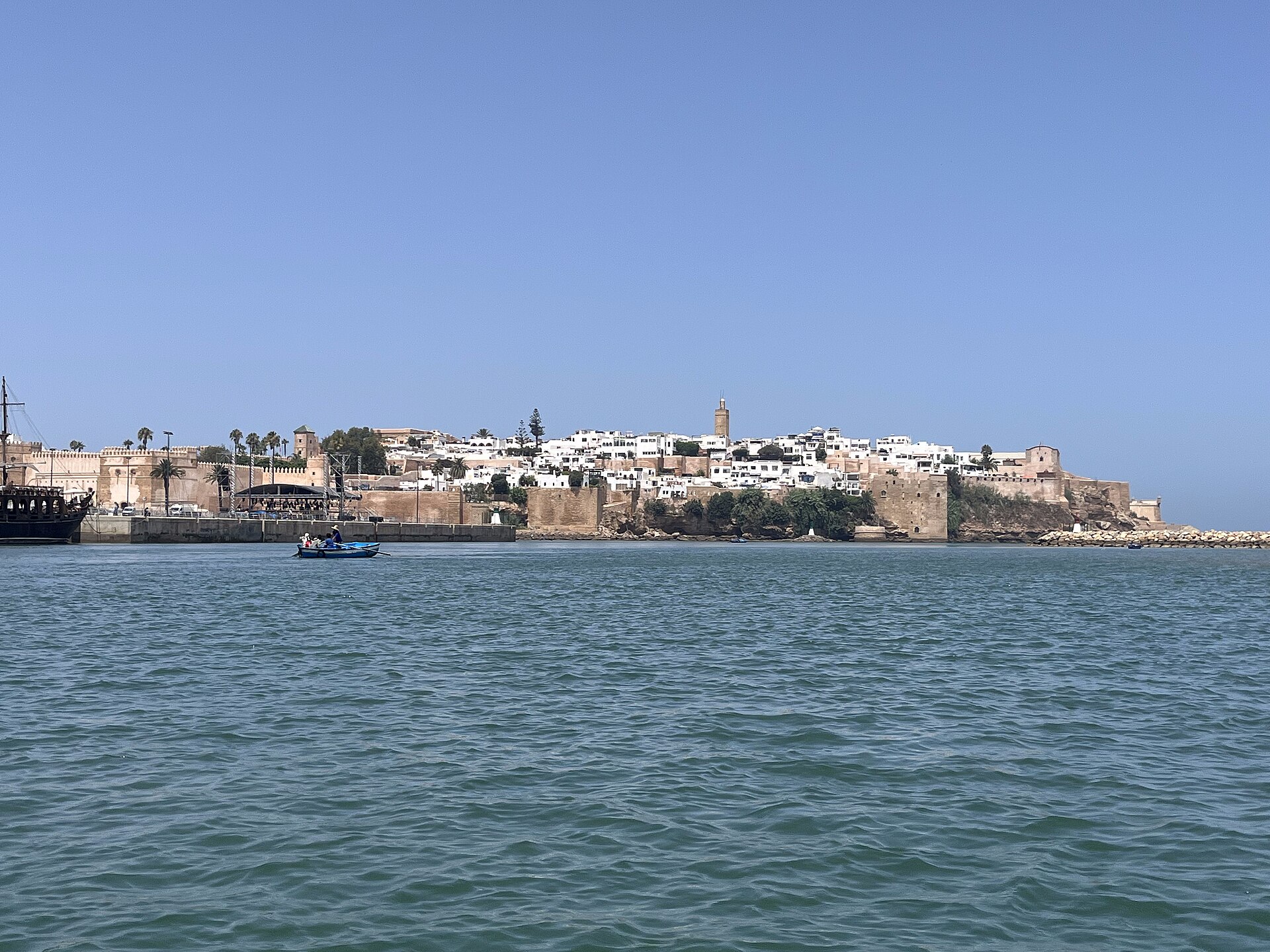
Featured photograph: Kasbah des Oudayas à Rabat, TheUmpteenthPostwoman, 25 July 2025, via Wikimedia Commons; CC BY-SA 4.0. Resized from the original; responsive crops may vary. It illustrates the location, not conditions on publication day.