Cape Coast Castle deserves preparation as well as time. Its history is inseparable from the transatlantic trafficking and enslavement of people, and a visit should make space for listening, questions and reflection. It is more than a stop to photograph between other attractions.
Make the castle the main purpose of this part of your day. Confirm the practical arrangements, allow time to understand the interpretation and leave some room afterwards before your next commitment.
Begin with the history, before the itinerary
The Ghana Museums and Monuments Board describes the castle as a historic museum and its regional headquarters. Its account traces the building’s changing European control and its role in the slave trade. UNESCO includes Cape Coast Castle within the wider World Heritage property of forts and castles along Ghana’s coast, recognising their importance to the history of African-European encounters and the African Diaspora.
Read a short introduction before arriving so that the guide’s explanation has a framework. Do not expect the architecture alone to explain how people were held, traded and forced from their homes. Follow the distinctions made by the interpretation, and ask for clarification where a word, period or relationship is unfamiliar.
A single visit cannot stand for the full history of Ghana or the experiences of all its people. Treat the account you hear as a serious opportunity to learn, while recognising how much more there is to understand beyond the site.
Confirm admission and a tour before setting out
On our 1 November 2026 source check, the GMMB castle page listed opening daily, 09:00–16:30. Confirm the day’s opening, tour language, start times, last admission and any restricted areas directly with the operator before relying on that window. A closing time is not a guarantee that a full tour can begin shortly before it.
Ask for the current fee. The castle page’s fee table is explicitly dated July 2023. The Board’s separate fees page says charges have been reviewed, while labelling the displayed figures as those from before the revision. Those figures are therefore not a reliable quotation for a visit today. Ask which admission category applies, what interpretation is included, how to pay and whether any camera permission or additional charge applies.
Use the castle’s official page and GMMB contact information for those checks. This article does not imply that a ticket, guide or departure has been reserved for you.
Ask about the route you will actually take
If access, stamina or confined spaces will affect your visit, describe your needs before joining a tour. Ask specifically about steps, uneven surfaces, lighting, seating, toilets, the route through the building and opportunities to leave a section or wait elsewhere. A general statement that a heritage site is open does not establish that every part is suitable for every visitor.
It is reasonable to choose a shorter visit or not to enter a particular space. Ask staff how to do that without separating from the group unexpectedly. If travelling with children, seek the museum team’s guidance on the explanation and route that would suit them; avoid treating difficult history as either a spectacle or something that can be understood through a quick photograph.
Give the interpretation your attention
- Listen first. Let the guide finish an explanation before arranging a photograph or moving to another part of the room.
- Ask with care. Questions about the evidence, the building’s use and the lives of people connected with it can deepen understanding.
- Follow current directions. Staff instructions, barriers and the route on your visit take precedence over a photograph or an old travel account.
- Check photography permission. Ask where and whether it is allowed, then respect any restriction. Other visitors’ emotional responses are not material for your own photographs.
- Leave spaces as you find them. Do not touch or move objects, marks or displays to improve a picture.
You do not need to manufacture a particular reaction. Some people will want to talk afterwards; others will prefer quiet. Give companions that choice, and avoid hurrying them towards the next attraction simply because it was placed on a long itinerary.
Keep time after the visit
Plan a straightforward return journey or a seated break that you have checked is available. Allow time for a drink, a meal or a conversation without requiring another tour immediately afterwards. You can decide later whether you want to read more, revisit a question or seek further interpretation.
Elmina and Kakum are separate destinations with their own purposes and practical demands. They are not compulsory additions to this visit. A day can be valuable without combining several significant places into one rushed circuit.
Check the wider journey too
Review current Ghana travel advice and local conditions, arrange reputable transport and confirm the actual route and return arrangements. Do not use an old quoted driving time as a guarantee. Carry what you need for your own comfort, check the weather, and take account of heat, rain and wet surfaces when deciding how much else to do.
For a different museum-led city visit, see our Livingstone story. Our Rabat guide considers respectful photography and the distinction between public and private spaces. These are different histories and settings; each deserves attention on its own terms.
Sources and photograph
Checked 1 November 2026: GMMB’s Cape Coast Castle history and visitor information, fee-revision notice and contact page; UNESCO’s forts and castles entry; and current UK travel advice for Ghana. Recheck the tour, charges, permissions and access for your own date.
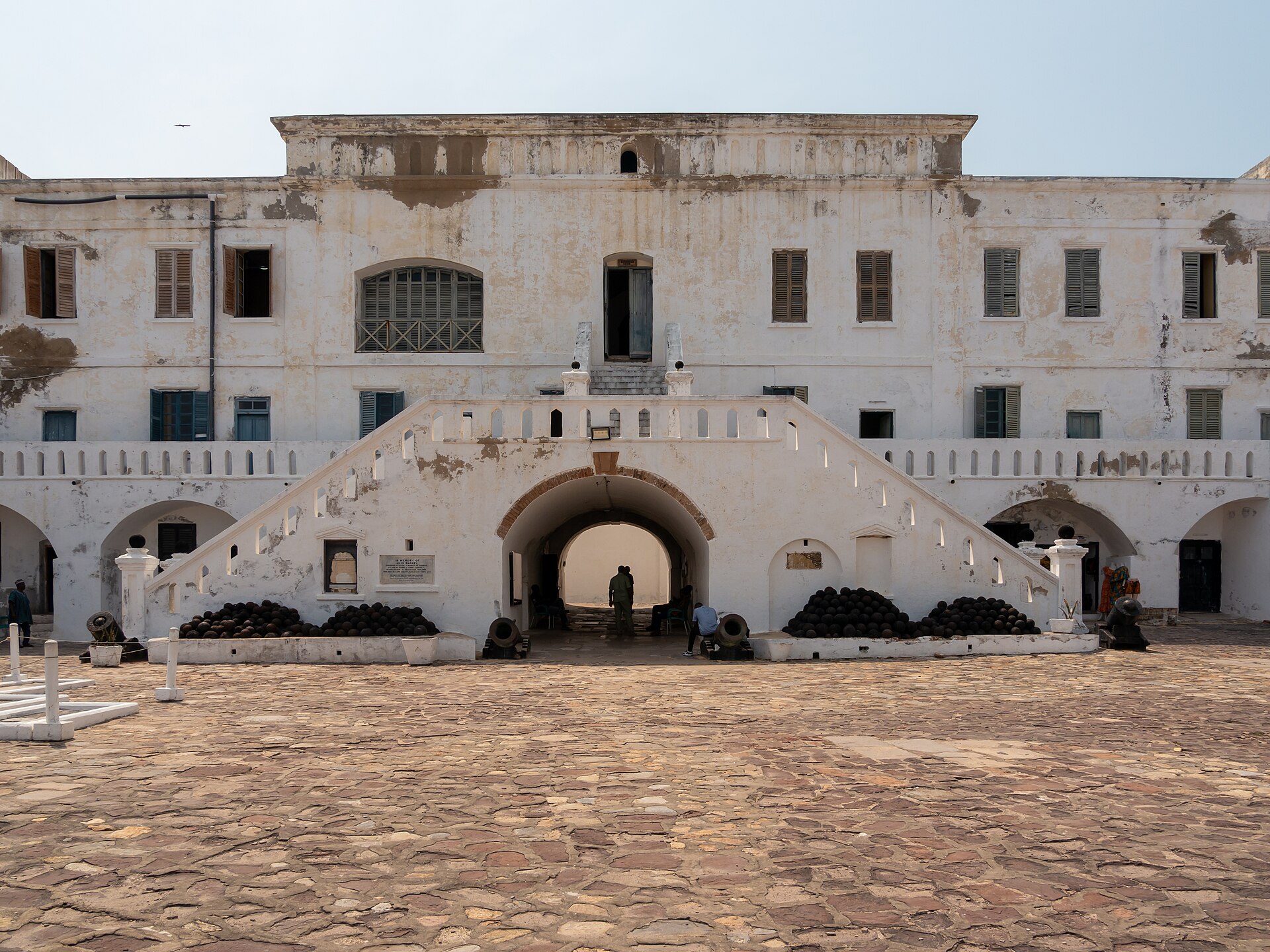
Featured photo: Castle, Cape Coast (P1100223), Matti Blume, 9 February 2023, via Wikimedia Commons; chosen licence CC BY-SA 4.0. Resized; responsive crops may vary and retain the same licence. The archival courtyard photograph illustrates the location, not today’s access, conditions or tour route.