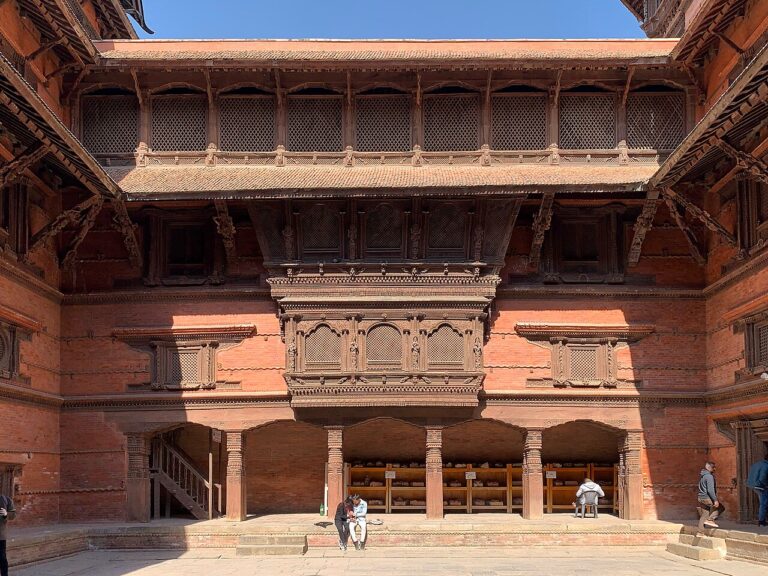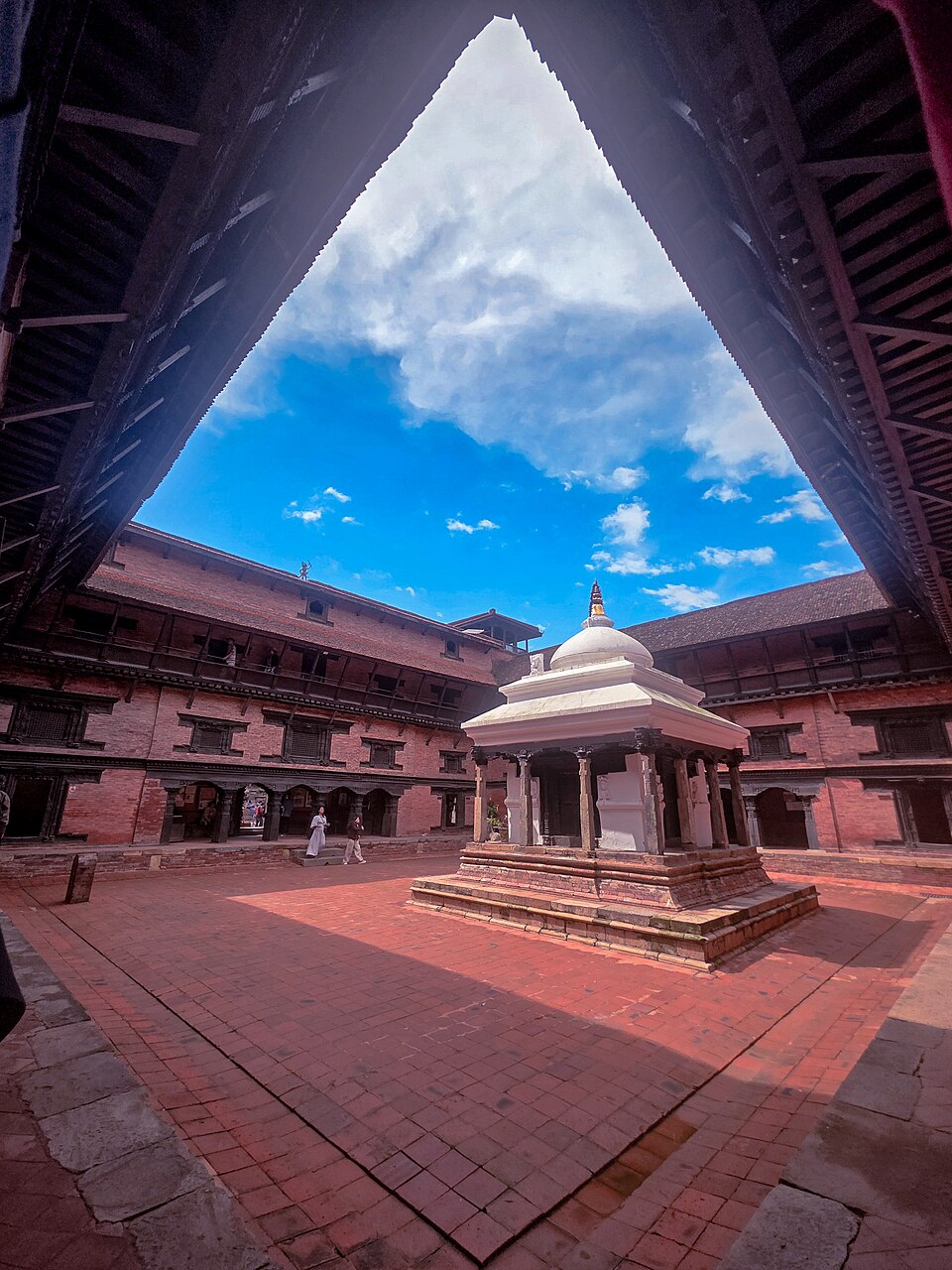
At Patan Museum in Lalitpur, pause in Keshav Narayan Chowk before going upstairs. The museum occupies part of the old Malla palace in Patan Durbar Square. The courtyard gives you a sense of where you are before the galleries bring you close to the work of metalworkers from the Kathmandu Valley.
Choose a piece with a label you can spend time with
Start with a small cast bronze or a gilt copper work. Before reading, follow the outlines of the hands, jewellery or base and notice what changes with the angle of the light. Then read the museum’s interpretation. Look for the name of the figure, the tradition the object belongs to and what the label says about how it was made or used. A single detail can turn an unfamiliar sculpture into something you remember after you leave.
Look for a difference in how the metal was worked
A cast bronze is formed in a mould. In repoussé, the maker works sheet metal from behind to raise a design. If the display identifies both techniques, compare the transition from flat surface to raised detail. The label may also explain how a figure is recognised or what role the object had in a Buddhist or Hindu setting. Allow the interpretation to guide that part of the visit.
Finish in the courtyard
Check current museum access and ticket arrangements before travelling to the square. If you plan to photograph anything, follow the gallery signs and staff’s instructions. On the way out, take a few minutes in the courtyard to look at the building around the collection. For a related walk around the valley’s palace architecture, see our guide to Kathmandu’s Hanuman Dhoka courtyards.
Sources and image credit
Featured photograph by Gr8lujah (2026), via Wikimedia Commons, CC BY-SA 4.0. Resized for web.
📩 For travel inquiries, personalized offers, and reservations, contact us at info@travel2.travel.
Your destination. Your journey. Our expertise.