Planning Oaxaca for Día de Muertos starts with a simple distinction: public celebrations welcome visitors, while family remembrance is not a performance arranged for an audience. Reserve the parts of the trip that genuinely sell out, leave space for the official programme to evolve, and treat every cemetery, altar and neighbourhood as a place with its own rules.
Reserve the structure, not an imagined spectacle
The Indigenous Festivity dedicated to the Dead takes place from the end of October into early November, according to UNESCO, and 1–2 November remain the central days in Oaxaca. Public programmes can begin earlier and continue later. Current official Oaxaca listings already show community events extending beyond those dates, while new 2026 announcements are still appearing.
Book the parts that protect your time and reduce pressure on residents:
- Accommodation: choose a licensed property in an area you can reach without relying on late-night road transfers.
- Arrival and departure: secure flights or intercity buses, then leave generous margins around the busiest days.
- Airport or station transfer: arrange a clear meeting point, especially for a late arrival.
- A locally led experience: if you want cultural context, reserve an accredited guide or a community-run visit whose host explains what is public.
- One special meal: book it only if the restaurant has published a real menu and cancellation terms.
Do not build a minute-by-minute itinerary from an old festival poster. Check that every event page names 2026, the organiser and the location. The Oaxaca tourism calendar and state government announcements are the useful starting points; social posts and reseller pages are not substitutes for an organiser’s notice.
The planning rule: reserve beds and transport early; reserve your interpretation of the festival never.
Separate public events from private remembrance
Comparsas, cultural programmes, public altars, markets and officially announced workshops are designed for a public audience. A household altar, a family gathering at a grave or a neighbourhood ritual may not be. The presence of other visitors does not automatically make a private moment open to photography or participation.
UNESCO describes the festival as a time when families prepare favourite foods, flowers, candles and offerings for deceased relatives. That is the centre of the tradition. Approach the public programme as a way to learn, not as permission to reproduce someone else’s mourning for a photograph.
Do not treat a cemetery as a ticketed attraction
Rules and attitudes vary by municipality and community. Before travelling outside Oaxaca de Juárez, confirm access with the community, municipal authority or a locally accountable guide. Ask whether visitors are welcome, what hours apply and whether photography is restricted. If there is no clear invitation, choose a public event in the city instead.
- Keep paths and entrances clear; families carrying flowers and food have priority.
- Do not touch graves, candles, flowers or offerings.
- Use no flash, tripod, drone or bright video light unless an organiser has explicitly authorised it.
- Ask before photographing an identifiable person, especially a child or someone praying.
- Accept “no” immediately and without negotiation.
- Leave when the gathering becomes intimate, even if nobody asks you to go.
What not to stage
Do not ask a family to repeat a gesture, move an offering, light another candle or pose beside a grave. Do not add a borrowed photograph to an altar for atmosphere. Face paint, costumes and themed dinners may be part of a commercial public event, but they should not be presented as proof that you have entered a private tradition.
Buy crafts because you value the maker’s work, not as props to scatter around a hotel room. The Oaxaca government’s 2026 artisan initiative specifically recognises local techniques, materials and community iconography. Ask who made an object and how to care for it; avoid bargaining that treats cultural labour as disposable decoration.
Use a two-question photography test
Before raising the camera, ask: Is this clearly public? Then ask: Would I still take this photograph if the person pictured could review it beside me? If either answer is uncertain, lower the camera.
For consent, sacred places and lived-in neighbourhoods, use our responsible travel photography guide. It is more useful here than a list of “best photo spots.”
Build a flexible four-part stay
- Arrival: settle in, walk the historic centre in daylight and locate official information points.
- Public programme: choose one announced event or exhibition and allow time to understand it.
- Unscheduled space: visit markets, workshops or museums without chasing every comparsa.
- Community visit only if invited: travel with clear local guidance and a return plan that does not depend on finding a taxi late at night.
This structure still works if an event changes or rain alters the evening. It also prevents the visit from becoming a race between ceremonies that were never intended to be consumed as a checklist.
Confirm these details one week before travel
- The current official event page, date, start point and organiser.
- Your accommodation’s check-in instructions and street-access plan.
- Return transport for any event outside the city centre.
- Whether the venue or community permits photography.
- Weather alerts and any municipal crowd or traffic measures.
Keep screenshots or offline copies of confirmed bookings, but recheck the live source on the day. If a local host changes the plan, follow the host’s guidance rather than the itinerary saved on your phone.
Planning sources: Oaxaca Tourism official events listings; Government of Oaxaca 2026 artisan announcement; UNESCO’s Indigenous Festivity dedicated to the Dead; Oaxaca tourist assistance. Information checked 25 September 2026. Event dates, access and community rules can change; verify them with the organiser or host.
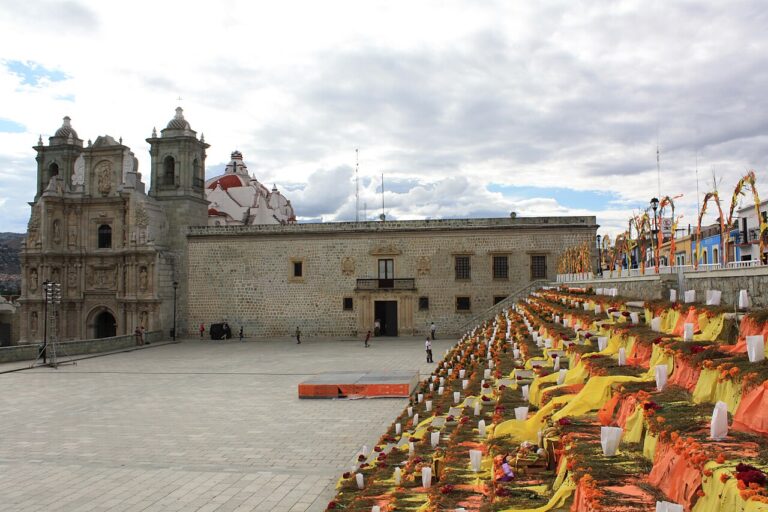
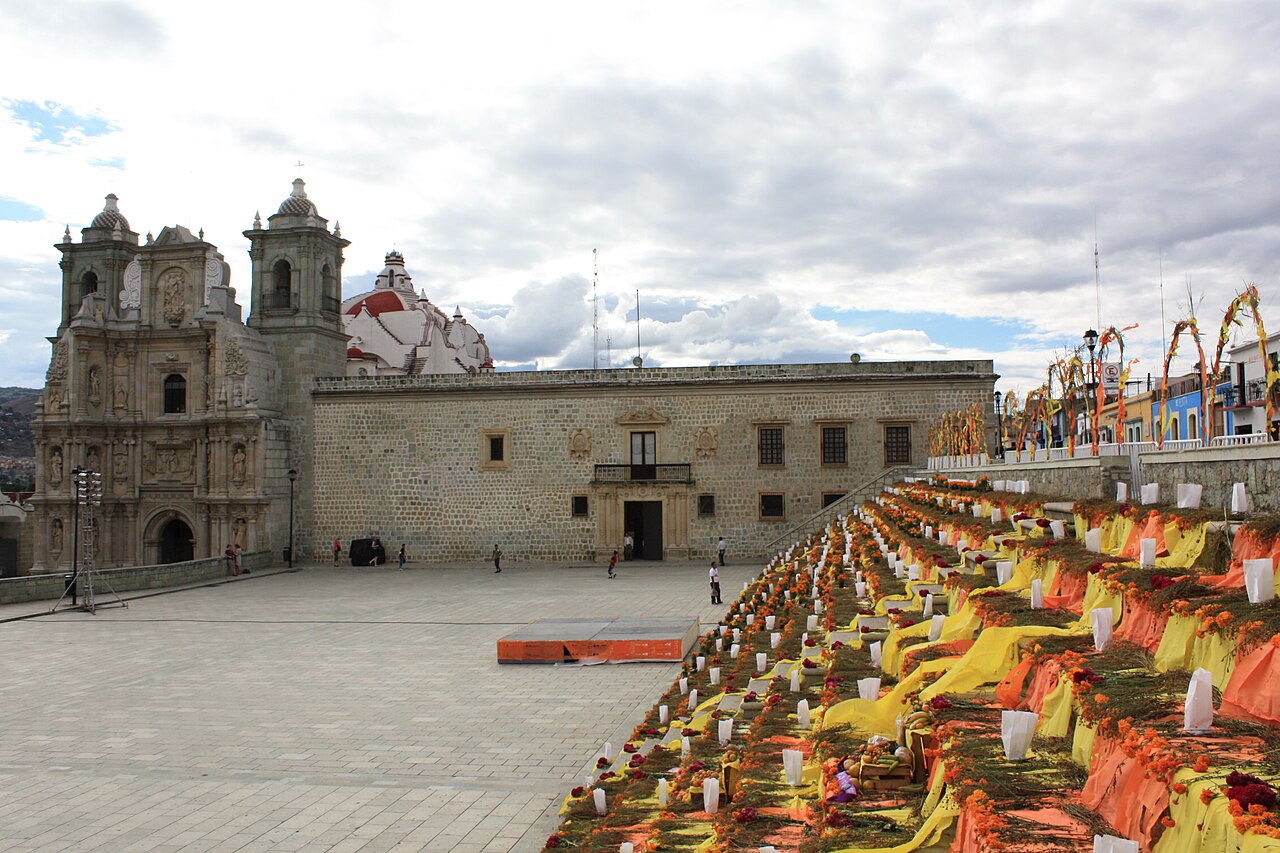
Featured image: “Day of the Dead altar in Oaxaca de Juarez” by Linkogecko, licensed CC BY-SA 4.0, via Wikimedia Commons.