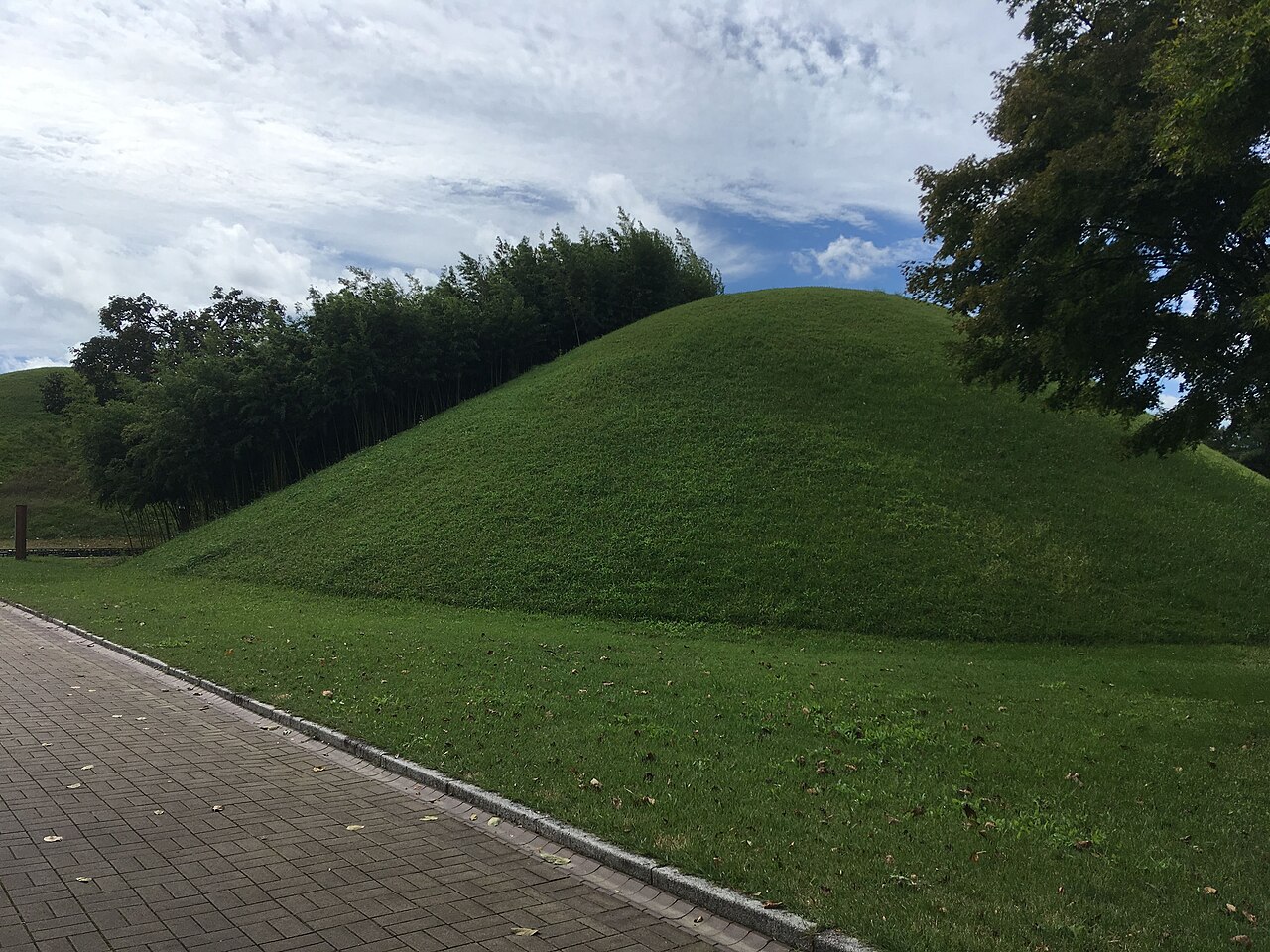
The rounded burial mounds in central Gyeongju change the scale of a city walk. Buildings and traffic remain nearby, but the eye is drawn to a much older landscape: curves of earth, paths between them and the space left around each monument.
For a short visit, let that landscape be the subject. Choose Daereungwon, an optional continuation towards Cheomseongdae and a pause for tea. You do not need to add distant temples or turn an afternoon in the centre into a contest with Gyeongju’s whole history.
Read the mounds as monuments, not viewpoints
Gyeongju’s historic areas preserve different aspects of Silla’s capital, from royal burials to palace remains and Buddhist monuments. UNESCO describes five separate component areas; the central tomb landscape is one part of a much wider heritage property, not the entire story in one park.
At Daereungwon, begin by following the designated paths and reading the interpretation that interests you. Compare the forms of the mounds, their spacing and the relationship between the monuments and the surrounding city. Looking does not require identifying every burial before you move on.
These are burial sites. Do not climb a mound for a photograph, step beyond barriers or treat a grassy curve as somewhere to spread out a picnic. Follow site instructions and photograph from places where visitors are permitted to stand. A quieter approach lets other people look too.
Choose Cheonmachong as a separate visit
Cheonmachong is the tomb associated with the heavenly-horse painting that gives it its name. The Korea Tourism Organization identifies it as the tomb within Daereungwon that is opened to visitors and explains that objects excavated there are held by Gyeongju National Museum.
That distinction matters. Walking through the wider tomb setting and entering an interpreted tomb interior are different experiences. Do not assume a park entrance, an older free-entry announcement or a photograph of an open doorway establishes today’s interior access or ticket conditions.
Check the current Cheonmachong counter or municipal visitor information before deciding. If it is open and you want the visit, give the interpretation proper attention rather than treating the interior as a shortcut to a more dramatic photograph. If access is restricted, the outside landscape still gives the day a clear purpose.
The national tourism listing currently publishes 09:00–22:00 with last admission at 21:30 and separate individual ticket categories. Other official itinerary material distinguishes gate and tomb timings. Confirm the specific interior’s arrangements on arrival instead of treating a late park-closing time as a guaranteed last entry to every space. This daytime route does not depend on a late visit.
Continue towards Cheomseongdae only if you want more
After the tomb park, decide whether your group wants another outdoor chapter. Gyeongju’s municipal tourism material places Daereungwon, Cheomseongdae and neighbouring central heritage areas close enough to consider together. That is an invitation to choose, not an instruction to walk every connecting path.
Cheomseongdae offers a different object to study: a compact stone landmark traditionally identified as an observatory, associated with the Silla period. Look at the structure from the permitted visitor areas and let its small scale be part of the experience. You do not need to climb it or enter a restricted area to see why it draws attention.
Keep the continuation short. If a path is closed, busy or uncomfortable, use an alternative authorised route or leave the landmark for another time. The phrase “at ground level” describes the focus of this visit; it is not a guarantee of step-free access, even surfaces or a measured accessible route.
Leave time for tea rather than another transfer
Return towards the central streets and choose a café that is actually open and suits your group. Make the pause part of the visit: a chance to talk about a label, a mound or a building rather than immediately looking up the next landmark.
Ask about the menu if a particular tea or ingredient matters to you. A traditional-looking frontage does not promise a specific preparation, a quiet room, dietary suitability or an unchanged family recipe. Choose on the experience available that day, not an expectation built from an old photograph.
It is reasonable to end here. Bulguksa, Seokguram and other places beyond this central route deserve their own transport and visiting decisions. Adding a long journey late in the day can displace the time you meant to spend understanding what is already around you.
A short decision list before setting out
- Choose the main visit: Daereungwon’s setting, with Cheonmachong’s interior only if its current arrangements suit you.
- Plan your arrival: confirm the current terminal or station and onward journey; do not assume every rail stop called Gyeongju is beside the tomb park.
- Keep the monument rules: paths, barriers and staff instructions take priority over a desired camera angle.
- Make autumn conditional: check the forecast and remaining daylight; neither dry paths nor peak foliage are promised.
- Protect the pause: leave enough time for a seat and a drink rather than filling the final hour with another transfer.
For a different heritage day built around living streets and a few considered stops, read our Galle Fort guide. Our slower autumn visit to Vilnius also leaves space between cultural sights.
Sources and photograph
Checked 19 October 2026: Korea Tourism Organization’s Cheonmachong listing; Gyeongju municipal tourism; its central heritage orientation, an older geographical reference rather than current transport or event information; and UNESCO’s Gyeongju Historic Areas entry. Site-specific admission and route notices must be checked before travel. No APEC2025 event, festival appearance or open tomb interior is promised.
Featured photograph: Daereungwon Tomb Complex, Gyeongju, 30 September 2018, by Christophe95, via Wikimedia Commons, CC BY-SA 4.0. Archival image, not today’s foliage or access. Resized for this page; responsive crops are displayed under the same licence.