A good Greek island itinerary is not the one with the most pins. It is the one that still works when wind, a changed sailing or a late arrival moves the day sideways. Build the route around a few strong links, protect the final night, and let the islands—not the transfer spreadsheet—set the pace.
Start with a route, not a wish list
Begin with one island group or a short chain with direct sailings. A simple Athens–Cyclades route, for example, is easier to repair than a plan that jumps between distant groups. Check the sequence on the operators’ own timetables before booking accommodation, then check it again close to travel. A line on a map is not proof of a direct boat, and a route that runs daily in summer may be less frequent later in the season.
If an island is the real purpose of the trip, give it enough nights to survive a delayed arrival. Two or three bases usually create a more satisfying week than four hurried stops. Our car-free Santorini guide shows the same principle on land: fewer crossings leave more time for the place itself.
Put the buffer where it matters
- Before a flight home: spend the final night on the departure island or mainland, not across a same-day ferry connection.
- Before a fixed event: arrive a day early if missing it would spoil the trip.
- After a long crossing: avoid a tightly timed onward bus, rental pickup or separate ticket.
- In a multi-island week: keep at least one afternoon uncommitted so a changed sailing does not erase the trip’s best experience.
THE ONE BUFFER TO KEEP
Do not rely on an island-to-airport connection on the day of an important flight. Put the spare night before the flight, not earlier in the itinerary where it cannot protect you.
When a sailing changes
Keep the booking reference, operator contact details and the port named on the ticket together. Confirm updates with the carrier or port rather than relying only on an accommodation host or an old screenshot. Greece’s Ministry of Maritime Affairs says passengers have a right to information when departure is cancelled or delayed; when sailing is prohibited because of adverse weather, the listed options include changing the ticket, remaining aboard where the captain considers it possible, or cancelling for a refund of the applicable fare.
EU ship-passenger rules usually cover departures from EU ports, but the exact assistance and compensation depend on the service, cause and length of disruption. Weather that endangers safe operation can affect compensation. Treat the official pages as the starting point for a claim, and keep receipts and written notices.
A calmer booking order
- Choose the two or three places that matter most.
- Check direct connections on operator timetables for your travel dates.
- Place the final-night buffer before the flight or other fixed departure.
- Book changeable accommodation around the most fragile link.
- Recheck the sailing and port shortly before departure.
The result may look less ambitious on paper. In practice, it creates more mornings that begin on an island rather than in a queue.
Sources: Greek Ministry of Maritime Affairs and Insular Policy: passenger rights; Your Europe: ship-passenger rights; Visit Greece: Cyclades. Check the carrier and port for live sailing information.
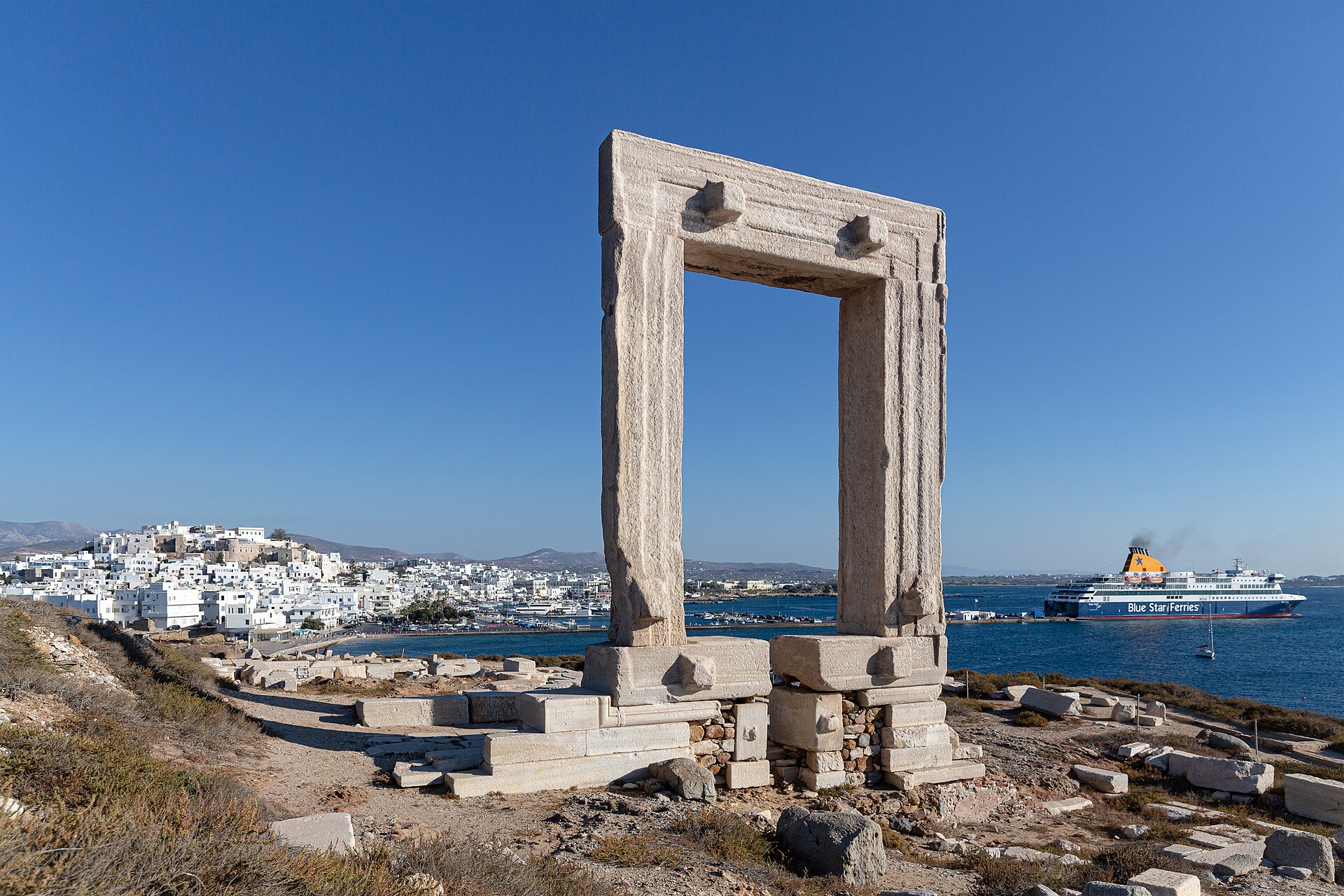
Photo: Naxos Chora and ferry traffic seen through the Portara. Manfred Werner (Tsui), 2020, via Wikimedia Commons, CC BY-SA 4.0. Resized/compressed; theme crops may apply.