At Sukhothai Historical Park, the first useful decision is how much ground you actually want to cover. A list of famous temples can suggest one continuous walk, but the remains extend beyond the old city walls. A manageable visit begins with a zone, a way of moving and a point at which you are happy to stop.
For a first visit, make the central area and Wat Mahathat the core of the day. Add the northern area only if you have the time, energy and transport for a separate outing. There is no need to turn an encounter with one ancient city into an endurance circuit.
Understand the zones before buying a ticket
The Fine Arts Department’s service information distinguishes three charged areas: the inner archaeological zone; the northern outer zone, including Wat Si Chum and Wat Phra Phai Luang; and the western outer zone, known as the Aranyik area. Entry arrangements should be checked for the particular areas you intend to visit.
Start by asking the ticket staff to mark your entrance, Wat Mahathat and your return point on a map. Keep that map with you. A temple name in an itinerary does not tell you whether it sits inside your current zone or requires a further journey.
Build the visit around one place to look closely
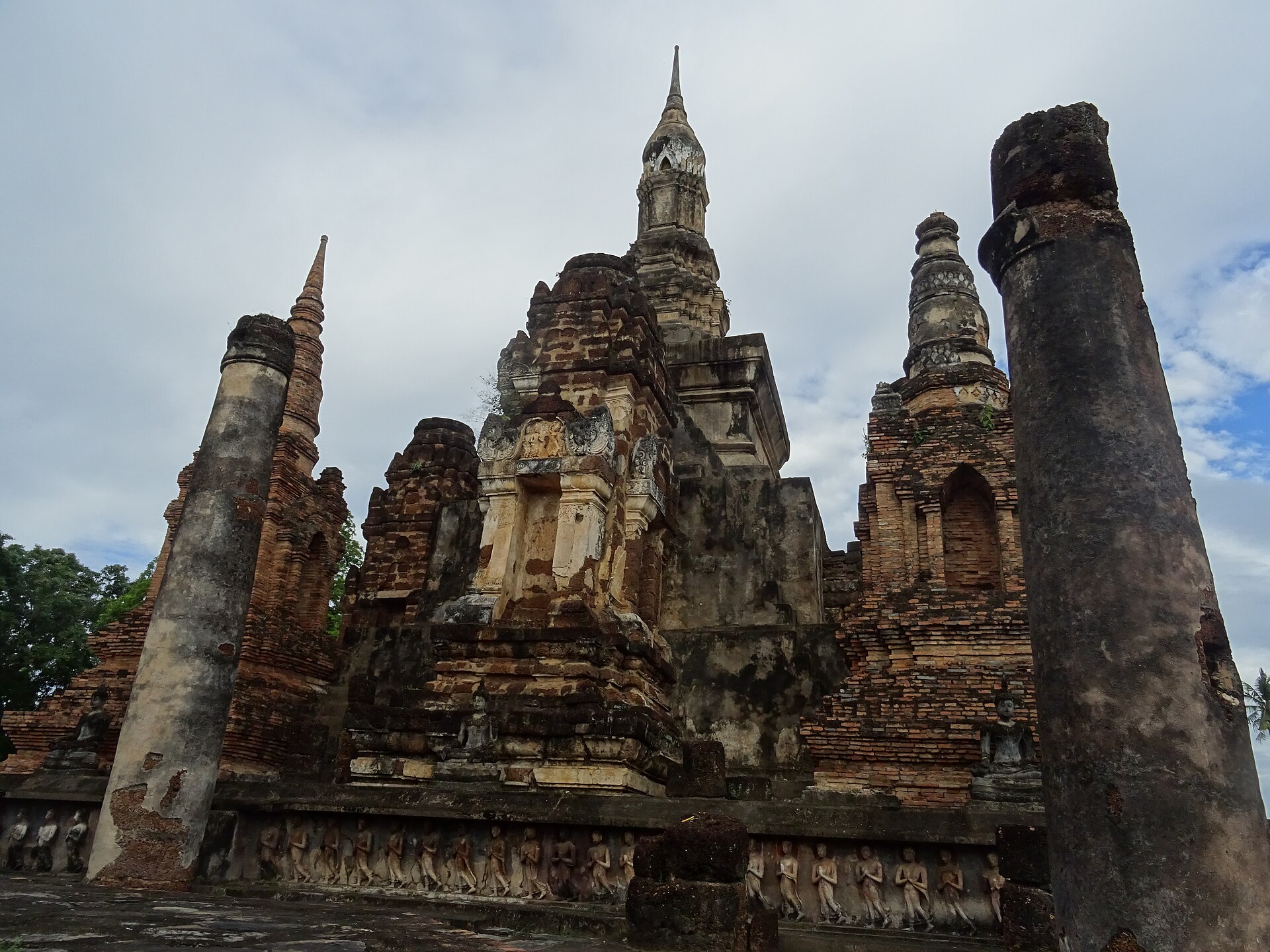
Wat Mahathat is a useful central anchor. UNESCO places Sukhothai’s importance in its role as a capital in the thirteenth and fourteenth centuries and in the development of an architectural style drawing on several influences. That is a reason to look at the buildings together, rather than treating each Buddha image as an isolated photograph.
Try a simple sequence: first view the temple from a permitted path at a little distance; then choose one detail, such as the relation between a column and the structures behind it; finally read the interpretation before moving on. Our photograph of Wat Mahathat was taken in August 2018 and illustrates the masonry, not current access or restoration conditions.
Choose transport for the visit you want
- Walking: suits a deliberately limited central visit. Check the distance back to the exit before adding another monument, and build in water and shade breaks.
- Bicycle: can make separated stops easier if you are comfortable riding. Check the brakes, fit and return arrangements before hiring; ask which paths and entrances allow cycles and whether there is a separate vehicle charge.
- Tram or other local service: ask what is running that day, which stops it serves and whether it returns to your starting point. The Fine Arts Department identifies the park tram as separately operated; do not assume its fare or timetable is included in admission.
Use the same care for arrival and departure. Confirm whether your accommodation is near the historical park or in the modern town, and agree the return journey before setting out. An old online songthaew interval is not a dependable evening transport plan.
Budget with the current zone prices in mind
The Tourism Authority of Thailand’s Japan office currently lists 200 baht for the inner area, 120 baht each for the northern and western areas, and 400 baht for all three. Treat these as planning figures and confirm the current tariff and ticket coverage with the park before paying.
Official pages are not fully aligned: the Fine Arts Department’s older service page still displays different admission figures, along with separate vehicle fees. A blanket “20-baht entry” is therefore unsuitable advice for an international visitor. Ask specifically about your visitor category, chosen zones and any bicycle or transport charge.
Confirm opening and last-admission times for your chosen zones directly with the park, particularly before planning an early start or late finish. The operator’s contact number is +66 55 697 527. This guide does not promise sunrise access or a particular tram frequency.
Keep the ruins and their meaning in view
Stay on permitted routes, keep off fragile masonry and Buddha images, and obey barriers even when they interrupt a photograph. Where worship is taking place, give people space and follow local instructions on dress, footwear and photography. If a surface is wet or a path feels unsuitable, turn back rather than stepping onto archaeological fabric to avoid it.
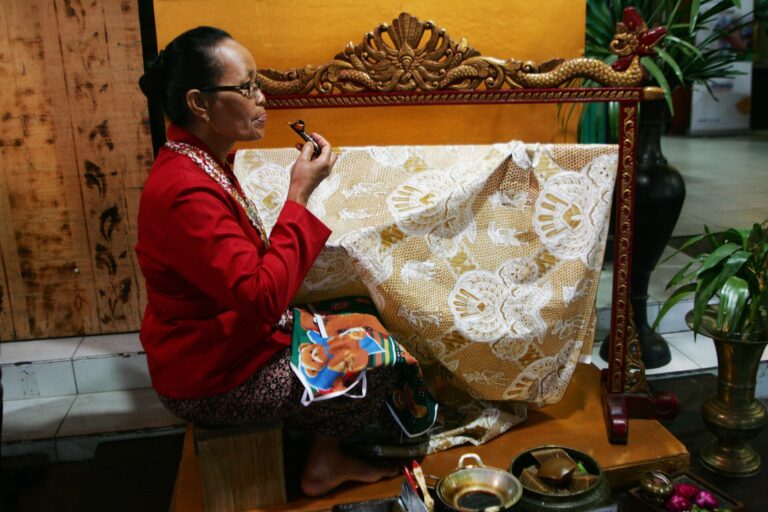
Our Kathmandu courtyard guide explores similar questions about visiting heritage spaces respectfully. For a different way to look beyond appearances, read our Yogyakarta guide to batik and the questions behind the cloth.
Sources and photograph
Checked 3 November 2026: Fine Arts Department service information for zonal arrangements and transport context; Sukhothai Historical Park operator for contact details; Tourism Authority of Thailand Japan office for the planning tariff; and UNESCO’s Sukhothai listing for historical context. Fees, access and services can change; the route choices are Travel2Travel editorial suggestions.
Featured photograph: Central temple of Wat Mahathat, Sukhothai Historical Park, 28 August 2018, by Christophe95, Wikimedia Commons, CC BY-SA 4.0. Resized to 1920 × 1440; responsive display may crop the edges. The photograph and any adapted crop remain under that licence. Archival image, not a report of present-day site conditions.