Kutaisi is worth giving a city day of its own. In the Royal District, a short walk can connect the shape of a street, an older façade and the Rioni River without becoming a race between monuments. Begin with a small area, let the White Bridge provide a clear point of orientation, and leave time to sit before deciding what comes next.
This is a guide to looking around the centre on foot, with a shorter version for rain or limited energy. It does not depend on entering a historic building, joining a tour or adding a cave or canyon excursion.
Find the Royal District before choosing a route
The Georgian National Tourism Administration places the Royal District around Tsisperqantselebi, St. Nino, Akaki Tsereteli and Alexander Pushkin streets, together with the White Bridge area. Its account connects the district’s name with the former royal residence, Okros Chardakhi, beside the Rioni between the White and Shota Rustaveli bridges.
Use those names to locate a small area on your current map. Choose a starting point you can find again, and check the way back to your accommodation or onward transport before setting off. You do not need to include every street. St. Nino and Alexander Pushkin streets give you two useful names to recognise while you find your bearings.
Look at how a corner is shaped and how a building meets the pavement. An upper window, balcony or passage may tell you something different from a grand entrance. Keep to clearly public space: a historic address is not an invitation to enter a home, school or business.
Let the White Bridge explain the river setting
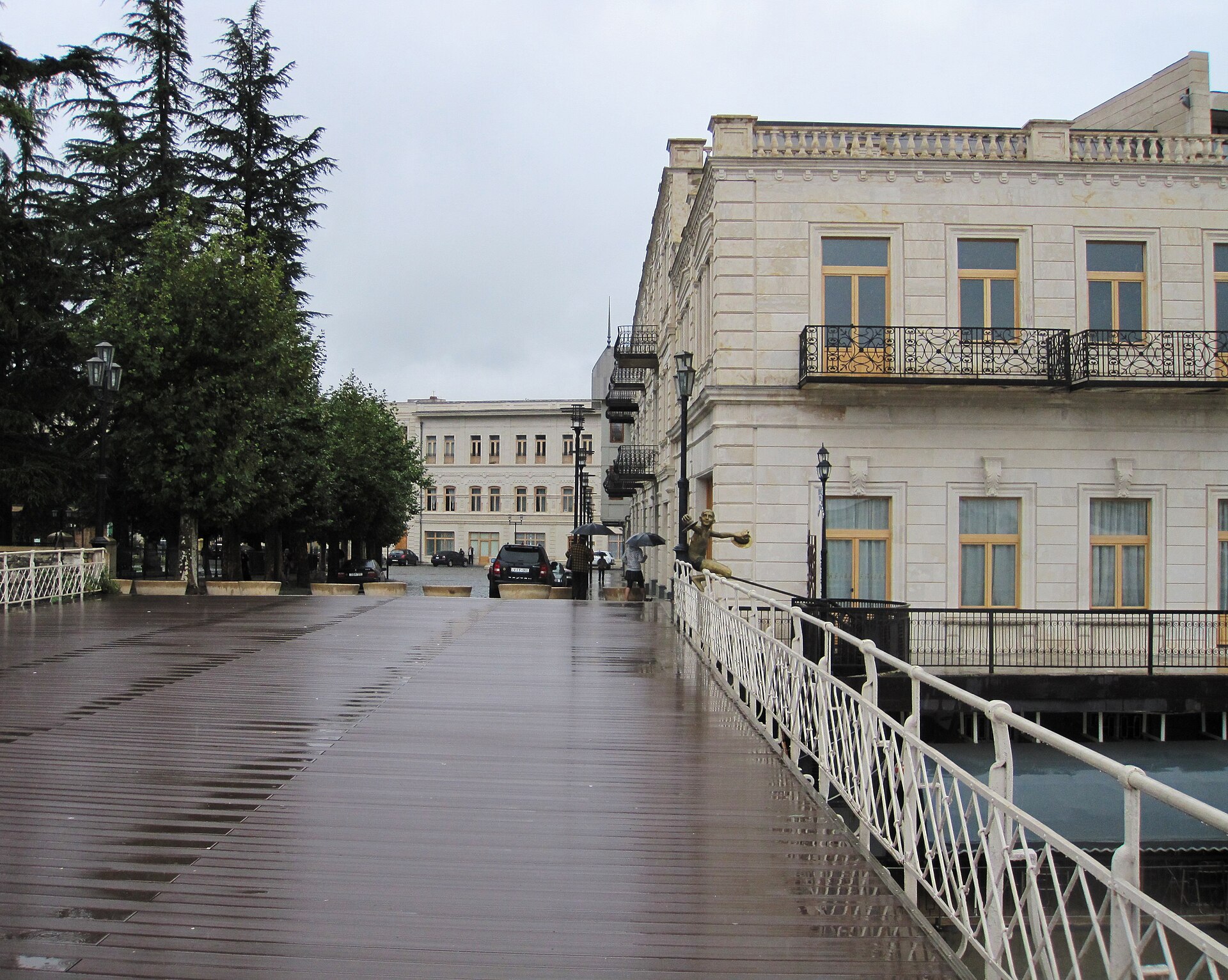
Make the White Bridge an orientation point rather than a deadline. The national tourism guide dates the bridge’s metal construction to 1872 and describes its connection between the Royal District and the opposite bank of the Rioni. That history gives an ordinary crossing a useful context: the river helps organise the city, rather than simply providing a backdrop.
Check the actual approach and any local access notice when you arrive. If the bridge is open and the surface suits you, pause where you can do so without obstructing people crossing. Look back towards the streets you have just left. You can choose a short return instead of adding a long riverside circuit.
Keep the river view to an appropriate public place. There is no need to descend towards the water or follow an informal path to improve a photograph. In rain, pay attention to wet surfaces and your footing; the appearance of a bridge in an old photograph does not establish its present layout or condition.
Read layers of use, not a complete royal palace
Royal District is a name for an area with a long history, not a promise of an intact palace tour. The tourism administration explains that only a small building survives from the former royal complex and that it was altered over time. It also describes a district where older streets and architecture remain alongside later changes.
That makes a slower kind of looking worthwhile. Compare the scale of neighbouring buildings. Notice a change in material, a repaired surface or a modern shop sign beneath an older upper floor. You do not have to assign a date to everything you see to appreciate that the centre has continued to change.
If a particular gallery or interior interests you, treat it as a separate visit: verify its current opening, admission and access with the operator. An architectural description is not an opening timetable. For another way of looking closely at urban details, our Gdańsk amber guide follows a material from interpretation to questions at a maker’s counter.
Build in a city pause
Choose a café or other seated stop that is actually open and convenient for your return. Read the current menu and prices, and ask about anything that matters to your order. A pause is also a chance to decide whether the walk has already been enough.
Use the map to retrace a route you understand, rather than adding a new neighbourhood simply because it is nearby. If you have enjoyed one street and a river view, you have a coherent introduction to this part of Kutaisi. Museums, religious sites and out-of-town places each deserve their own preparation.
Adjust the walk to the day
- For a brief visit: choose one Royal District street, a look towards the White Bridge and a seated stop.
- If it is wet: shorten the exposed section, check surfaces and make the indoor pause your anchor. You can look towards a bridge without crossing it.
- If access determines your route: ask locally about the precise approach, kerbs, steps, seating and toilets. A central location does not establish a step-free route.
- Before dark: leave enough daylight for the walk you choose and confirm your return arrangements. Current UK advice notes uneven pavements and poor lighting away from main roads.
Read current Georgia travel advice before travelling, including advice for transit countries and regional restrictions. Its safety guidance recommends avoiding demonstrations and following local directions; gatherings can disrupt travel in cities beyond Tbilisi too. Check local conditions and transport rather than treating this small city walk as advice for a wider road trip.
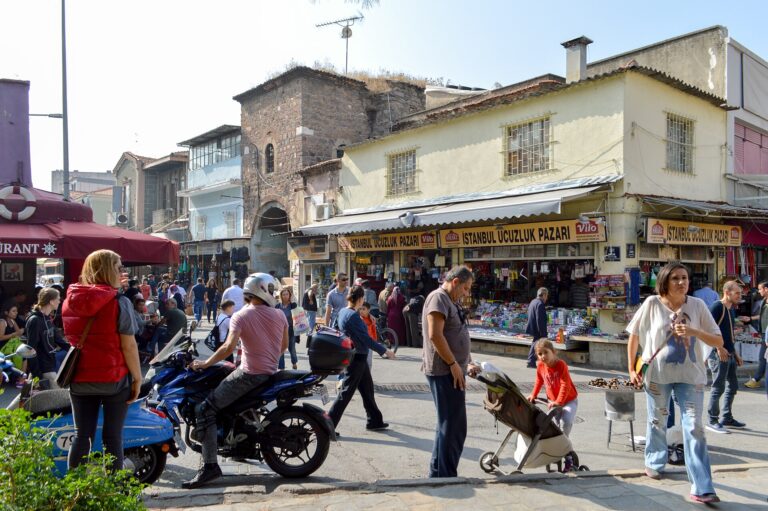
Our İzmir story also leaves room for a city to reveal itself through everyday encounters. In Kutaisi, the reward can be as simple as understanding how a few streets meet the river.
Sources and photograph
Checked 2 November 2026: the Georgian National Tourism Administration’s Royal District guide and Kutaisi overview; and current UK travel advice linked above. Historical descriptions are used for context; current local access, business hours and transport still need checking for your visit.
Featured photograph: White Bridge, Kutaisi (2), Kober, October 2009, via Wikimedia Commons; released into the public domain by its author. Resized; responsive crops may vary. Archival view of the bridge approach, not a record of today’s deck, access or weather.