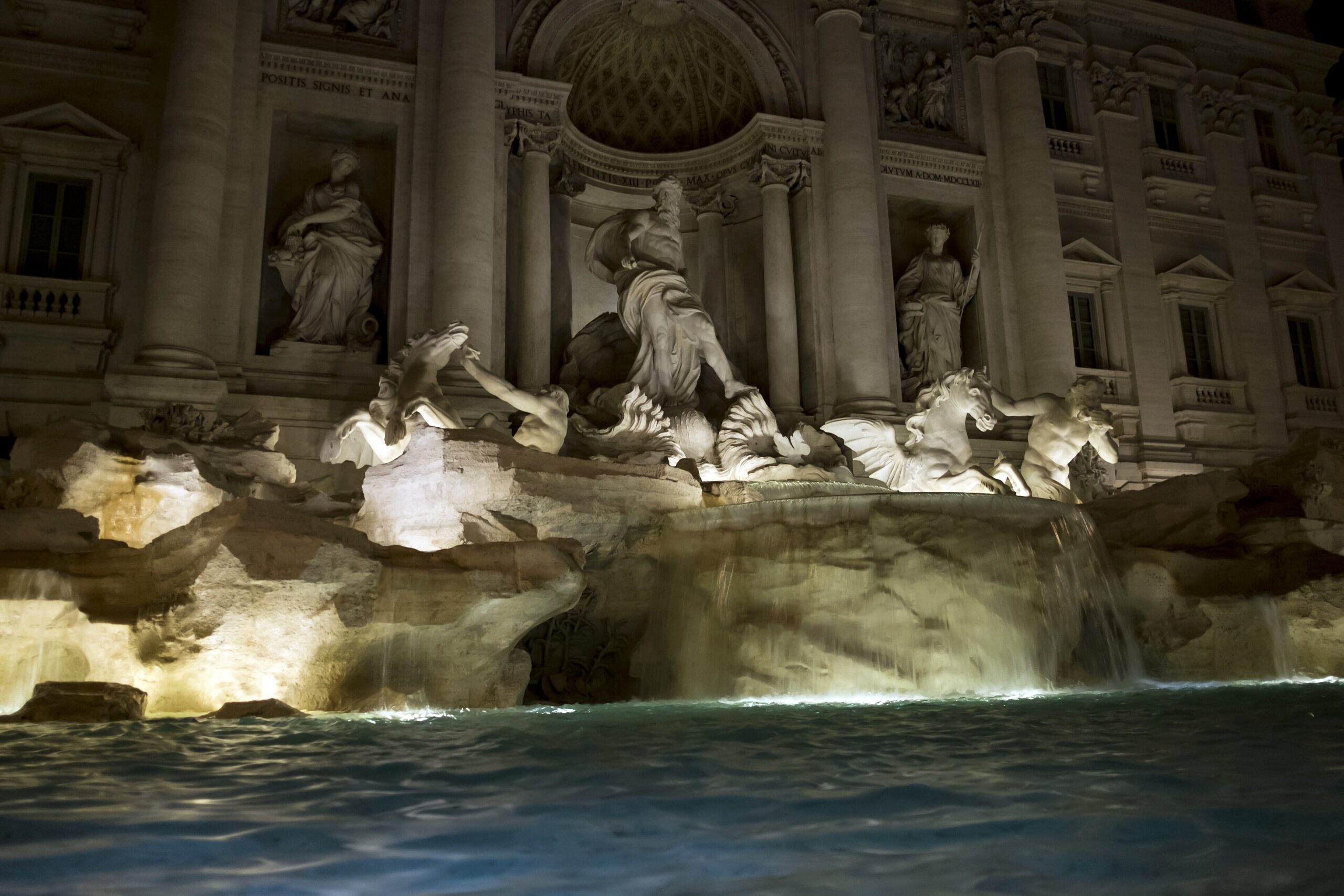
Rome has changed the way visitors reach the closest viewing area at the Trevi Fountain. Since 2 February 2026, tourists and non-residents pay €2 to enter the basin zone directly in front of the monument. The fountain is still a public landmark, but a little planning now makes the difference between a graceful stop and a confusing queue.
What the €2 ticket covers
The charge applies to the basin area—the controlled space closest to Nicola Salvi’s fountain—not to every approach street in the Trevi district. Rome’s official tourism service says paid access runs daily from 9am to 10pm, including the first Sunday of the month. Residents, children aged five and under, and disabled visitors with a companion are exempt.
Opening arrangements can change for maintenance or public-order reasons, so check the official Trevi Fountain website on the day you plan to go. The official page also links to authorised online ticket sales; avoid buying from an unfamiliar reseller simply because it appears first in a search.
Choose the visit you actually want
If a close, unobstructed look at the sculpture matters to you, the managed basin area is the clearest option. If Trevi is one stop on a broader walk, you may prefer to appreciate the fountain from the surrounding public space and spend the €2—and the queueing time—elsewhere. The useful distinction is proximity: the ticket buys controlled access to the foreground, not a private or extended visit.
Before you join the line
Keep your ticket accessible, carry only what you need, and decide in advance whether you want to enter the basin area. That small decision prevents last-minute negotiations in one of Rome’s busiest spaces.
Time it for atmosphere, not a guarantee of emptiness
Trevi is famous at every hour, so there is no honest promise of a crowd-free visit. Early morning usually suits travellers who want a quieter street scene, while evening brings dramatic lighting and a livelier mood. The paid hours are long enough to fit the fountain around a museum booking or dinner rather than building an entire day around it.
Respect the setting even when the square feels theatrical. Do not climb on stonework, block narrow approaches for a long photo session, or treat the water as a place to cool off. The coin toss remains a tradition, not an obligation; the view is the reason to come.
Turn Trevi into a compact central-Rome walk
The fountain works well as the middle of a short route rather than an isolated dash. Start at the Spanish Steps, walk south through the lanes to Trevi, then continue west towards the Pantheon and Piazza Navona. The sequence moves through a dense part of the historic centre where walking is often simpler than making several short transport hops.
- For an architectural thread: notice how Trevi’s triumphal-arch façade turns Palazzo Poli into part of the monument.
- For a slower pause: save your café stop for a side street away from the fountain’s immediate crowd.
- For another ticketed interior: the Pantheon has its own admission arrangements; check its official information rather than assuming spontaneous entry.
A sensible Rome checklist
- Check the official opening notice on the day of your visit.
- Buy only through the official ticket link if you want basin access.
- Allow extra time if Trevi sits between timed museum reservations.
- Wear shoes that handle polished stone and uneven lanes.
- Keep the surrounding streets moving when you stop for photographs.
For a wider plan, pair this update with 48 hours in Rome, without the rush and browse the Rome destination collection.
Check before you travel
Practical information was checked against Turismo Roma’s Trevi Fountain page and the official monument website on 14 September 2026. Photograph: Silviomerci1971 via Wikimedia Commons, licensed under CC BY-SA 4.0; resized by WordPress.

