Porto can tempt you into a day of perpetual climbing: another tower, another church, another view from above the Douro. For a first visit, try the opposite. Give the day three places to settle—Bolhão, a stretch of old streets and the river—and let the spaces between them stay flexible.
This is a market-to-water itinerary, not a promise of a step-free descent or a race through every landmark. Its best version leaves enough time to buy something at a stall, notice a building you did not come looking for and sit beside the river without watching the clock.
First pause: a market that is still a market
Make Mercado do Bolhão your first substantial stop. Look at what is being sold before deciding what to eat. A conversation about a piece of fruit, a small purchase or a coffee gives you a different relationship with the place from a quick photographic lap.
The operator currently lists market hours of 08:00–20:00 Monday–Friday and 08:00–18:00 Saturday; Sunday is closed. Its restaurant timetable is separate. For Monday 19 October, the normal weekday schedule makes this a sensible starting point, but check notices before leaving and do not assume every individual trader keeps identical hours.
Let the working space set the manners. Stand aside when customers are being served, ask before photographing a person and avoid blocking a stall while discussing your route. You do not need a restaurant reservation or a tasting programme to enjoy looking carefully and making a modest purchase.
Visit Porto identifies a direct connection between the market and Bolhão Metro station. That is useful when choosing an arrival point, but anyone depending on lifts should check the operator’s current accessibility information. A connection on a map is not confirmation that every part of the journey will work for your needs.
Second pause: choose a piece of the old city
For the next chapter, use São Bento and Rua das Flores as orientation points rather than compulsory interiors. The city’s Accessible Porto guide connects Bolhão, São Bento and Rua das Flores in its downtown and historic-centre itinerary. Borrow that geographical thread without taking on every attraction in the longer route.
Near São Bento, decide whether a short look inside the station fits the conditions. It remains a transport building: keep routes clear for passengers and treat a crowded hall as a reason to move on, not a challenge to get your photograph anyway.
Then give Rua das Flores time at street level. Follow a short section, look upwards at the façades and choose somewhere for lunch when you want a proper rest. A church exterior or a shopfront can be an interesting encounter without becoming another ticket to buy.
This pause should absorb the middle of the day, not merely the minutes between headline sights. If you want a museum or church interior, choose one, verify that day’s entry arrangements and let it replace part of the walk.
Third pause: finish on Porto’s side of the Douro
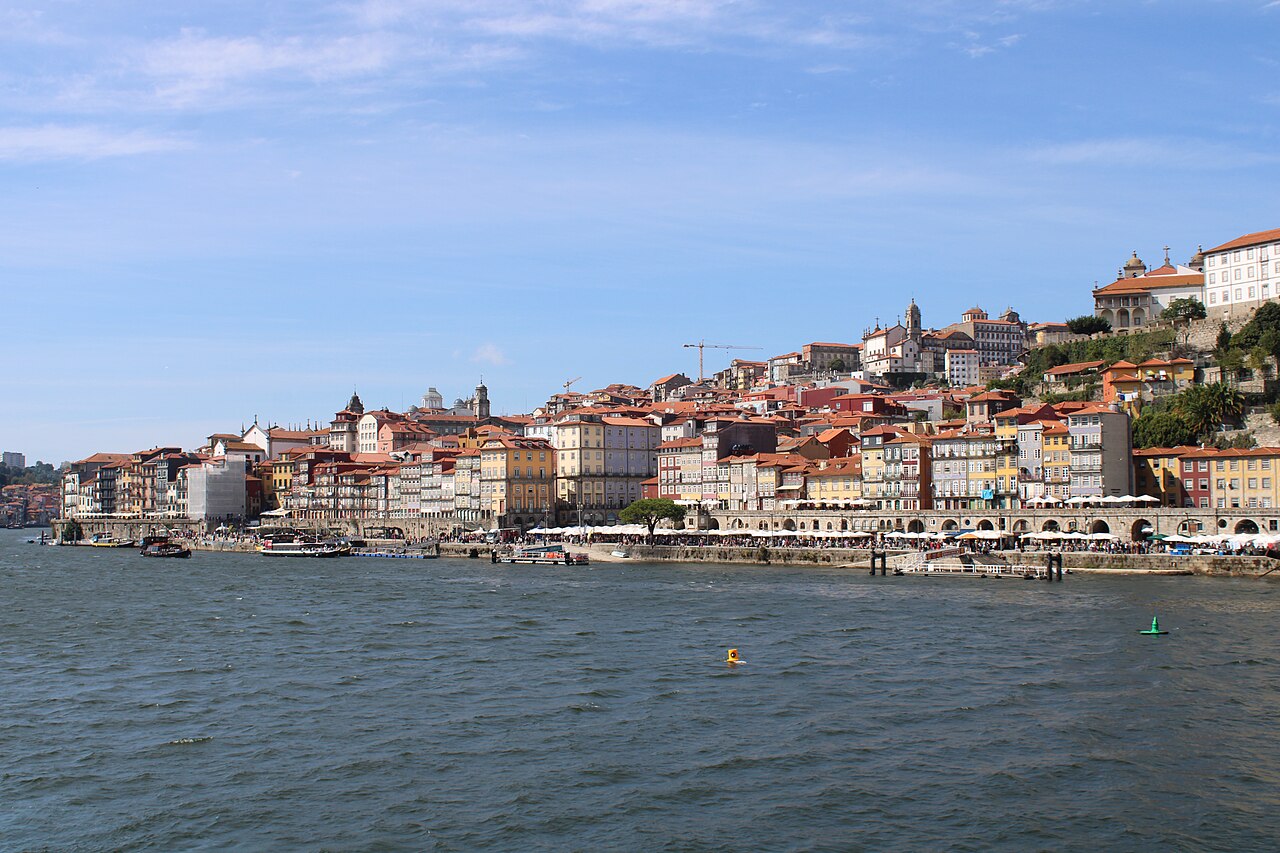
Make Ribeira the river chapter. Settle on a manageable waterfront section, find a place to pause and look back at how the buildings occupy the slope. The relationship between city and river is enough of a subject without immediately heading for another viewpoint.
UNESCO’s World Heritage property includes Porto’s historic centre, the Luiz I Bridge and the Monastery of Serra do Pilar. That broad designation is context, not a checklist for one afternoon. Our three-pause plan does not require crossing the bridge or ascending to the monastery.
Port-wine cellar visits belong to a separate decision. If you add one in Vila Nova de Gaia, identify the correct bank, book any required visit and arrange the transfer. A photograph taken from across the river is not a reason to turn this Porto day into a compulsory two-bank circuit.
Decide on the return before the last descent
Descending does not remove the effort of hills, and getting to the waterfront is only half the journey. Before the river section, decide whether you want to walk back, use public transport or arrange a taxi. Check current routes and the actual pickup point rather than relying on a familiar-looking line on an old map.
- If the surfaces are wet: shorten the walking sections and avoid adding stairs or steep shortcuts for their own sake.
- If mobility or fatigue makes the descent unattractive: keep the old-street pause small and arrange a vehicle transfer to a suitable river stop.
- If the weather deteriorates: a longer lunch or one verified indoor visit can replace the waterfront chapter.
- If the day feels complete early: stop after two pauses. The river will still be there on another visit.
Check a freshly dated forecast and local instructions before leaving; this itinerary is not a report of today’s weather or an assurance that a particular path is open. For another day built around selecting rather than accumulating stops, see our Valencia market-and-old-town itinerary. Our unhurried Mendoza plan separates a city visit from an optional winery outing.
Sources and photograph
Checked 19 October 2026: Mercado do Bolhão’s operator timetable; Visit Porto’s market information; the city’s Accessible Porto guide for geographical orientation, not live service status; and UNESCO’s historic-centre entry. The three-pause sequence is an editorial suggestion. Individual trading, admissions, transport and access can change.
Featured photograph: Porto’s Ribeira viewed from the Gaia side, 23 September 2022, by René Hourdry, via Wikimedia Commons, CC BY-SA 4.0. Archival image, not current conditions. Resized for this page; responsive crops are displayed under the same licence.