An overnight train is transport and accommodation, but it should not be booked like either one in isolation. The route can save daytime travel and a hotel night, yet comfort depends on the exact product: a seat, couchette and sleeper are not interchangeable names for the same experience.
Use this checklist after choosing a route and again before departure. Operator rules, rolling stock and border procedures vary, so treat a specific train’s confirmation as more reliable than a general night-train article—including this one.
Confirm what you have actually booked
Read the carriage and accommodation description on the operator’s site and in the confirmation. Check whether the compartment is shared or private, how many berths it contains, whether bedding is supplied and whether the toilet or shower is inside the compartment or elsewhere in the carriage.
ÖBB Nightjet, for example, distinguishes couchettes, mini cabins and sleeping cars. Its couchette information describes shared compartments and newer mini-cabin features, while its sleeping-car page separates several comfort categories. Those details do not automatically apply to EuroNight services or another operator’s train.
If privacy, accessibility or travelling as one group matters, verify that the arrangement is confirmed—not merely requested. Ask about gender-specific or private-compartment rules where relevant, and check whether children or pets change the booking requirement.
Pack a small night bag
Keep the items needed between boarding and breakfast in one easy-to-reach bag: travel documents, tickets, medication, phone and charger, water, earplugs, eye mask, toiletries and a warm layer. Do not plan to unpack the main suitcase in a narrow compartment.
Label luggage and secure valuables according to the operator’s guidance. Nightjet’s service and equipment FAQ directs passengers to use suitable racks, under-seat space or other designated storage and to keep passages, doors and escape routes clear. Available storage differs by train, so check dimensions when carrying unusually large items.
Agree with companions which bag needs to remain accessible. A neat compartment at boarding is easier to share at 02:00.
Keep border documents with you
Carry the documents required for every country and traveller on the route, including children. Do not bury them in checked, locked or hard-to-reach luggage. Rules depend on citizenship, residence and itinerary.
For EU nationals travelling in the EU and Schengen area, the European Union’s official travel-document guidance explains that a valid passport or national identity card is still needed and that temporary internal-border checks can occur. Non-EU travellers should use the relevant EU guidance and each destination’s current official requirements.
Border or police checks may happen while you would otherwise be sleeping. Follow crew instructions and keep the document ready without leaving valuables unattended.
Make boarding easy
Check the departure station, train number, carriage and boarding information on the travel day. Arrive with enough time to find the correct part of the platform. Nightjet asks passengers to be in their compartment within 15 minutes after departure; another operator may have different instructions.
Eat before boarding or confirm the actual onboard offering rather than assuming a dining car. Download tickets and essential information for offline use, because connectivity depends on the train and route. If a delay would affect a self-booked onward ticket, understand the protection or lack of protection before travel.
Plan the first hour after arrival
An early arrival can precede hotel check-in, local transport frequency or breakfast opening. Save the station layout, a luggage-storage option you have verified and the route to the first realistic stop. Keep a clean layer and basic toiletries in the night bag so the morning does not depend on opening the main suitcase in a busy station.
Arrival note
Make one plan for an on-time arrival and one for a delay. Neither should depend on the last possible connection, immediate room access or an unverified station locker.
Our European shoulder-season packing guide helps keep the main bag manageable. For a journey that continues through Slovenia, the Ljubljana–Bled–coast rail itinerary shows how to leave room around connections.
Planning sources checked 19 September 2026. Reconfirm the operator, rolling stock, accommodation, luggage, border and accessibility rules for the exact train and date.
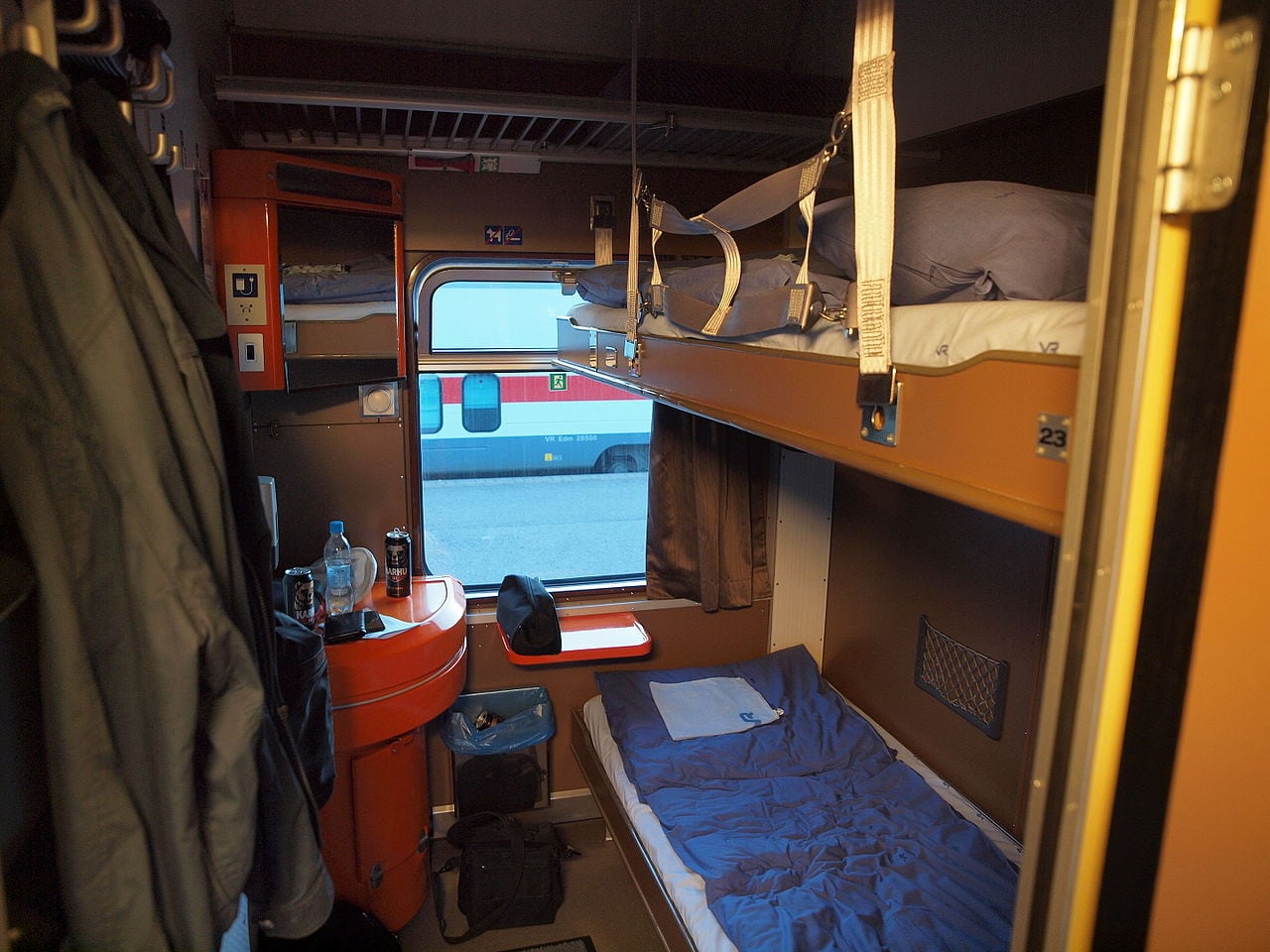
Featured photograph: an illustrative sleeping cabin on a Finnish Helsinki–Kolari night train, photographed 1 August 2015 by JIP, via Wikimedia Commons, CC BY-SA 3.0. A 1280-pixel Wikimedia derivative was compressed for the site; the cabin does not represent every train or operator and display crops may apply.