A Saturday in Ōtepoti Dunedin can begin with breakfast from a regional producer and end with a closer look at the city, without turning into a long excursion. The railway station gives the morning a useful centre: the Otago Farmers Market is beside it, while the building itself offers architecture and an optional gallery visit.
A note on timing: this is a plan for a future Saturday in Dunedin’s local time. By the European morning of 31 October 2026, that day’s New Zealand morning market has already finished. Check the arrangements for the Saturday you intend to visit rather than setting out on the strength of a publication date.
First: breakfast at the market, with room to browse
The Otago Farmers Market’s own website lists Saturdays, 08:00–12:30, in the northern carpark at Dunedin Railway Station. Confirm any changes and the attending vendors before leaving. A regular weekly timetable does not guarantee the presence of a particular stall or the availability of a particular food.
Start by looking at what you would actually like to eat. Choose a manageable breakfast and a drink, then leave time to talk to a producer if the queue allows. You do not need a succession of purchases to make the visit worthwhile.
The operator describes a food market drawing vendors from the wider Otago region. That makes questions about origin and season useful: where was something grown, when was it harvested, or what went into a prepared dish? Ask about the individual product rather than assuming every stall has the same supply or preparation.
The market’s FAQ says many traders take EFTPOS or cards, while recommending cash. Bring a payment backup and check before ordering. It also says a weekly stall map is available at the site office by the entrance. Use that help rather than blocking a busy aisle to work out where to go.
Make the market comfortable for you and other people
- Dietary needs: ask the trader about the food you are buying, including ingredients and preparation. A broad vegan or gluten-free listing cannot answer every question about an individual order.
- Carrying: bring a shopping bag and consider how you will keep anything perishable suitable for the rest of your day. Do not buy more than you can manage.
- Other visitors: keep queues and access routes clear, and ask before taking close photographs of people at work.
- Market rules: the operator excludes dogs from the market except service dogs, and does not permit smoking or vaping within the site.
Do not depend on finding an empty seat at exactly the moment you need one. If standing or carrying food is difficult, plan a confirmed seated breakfast separately and make the market a shorter browsing stop. There is no need to make discomfort the price of participation.
Second: look at the station as a building
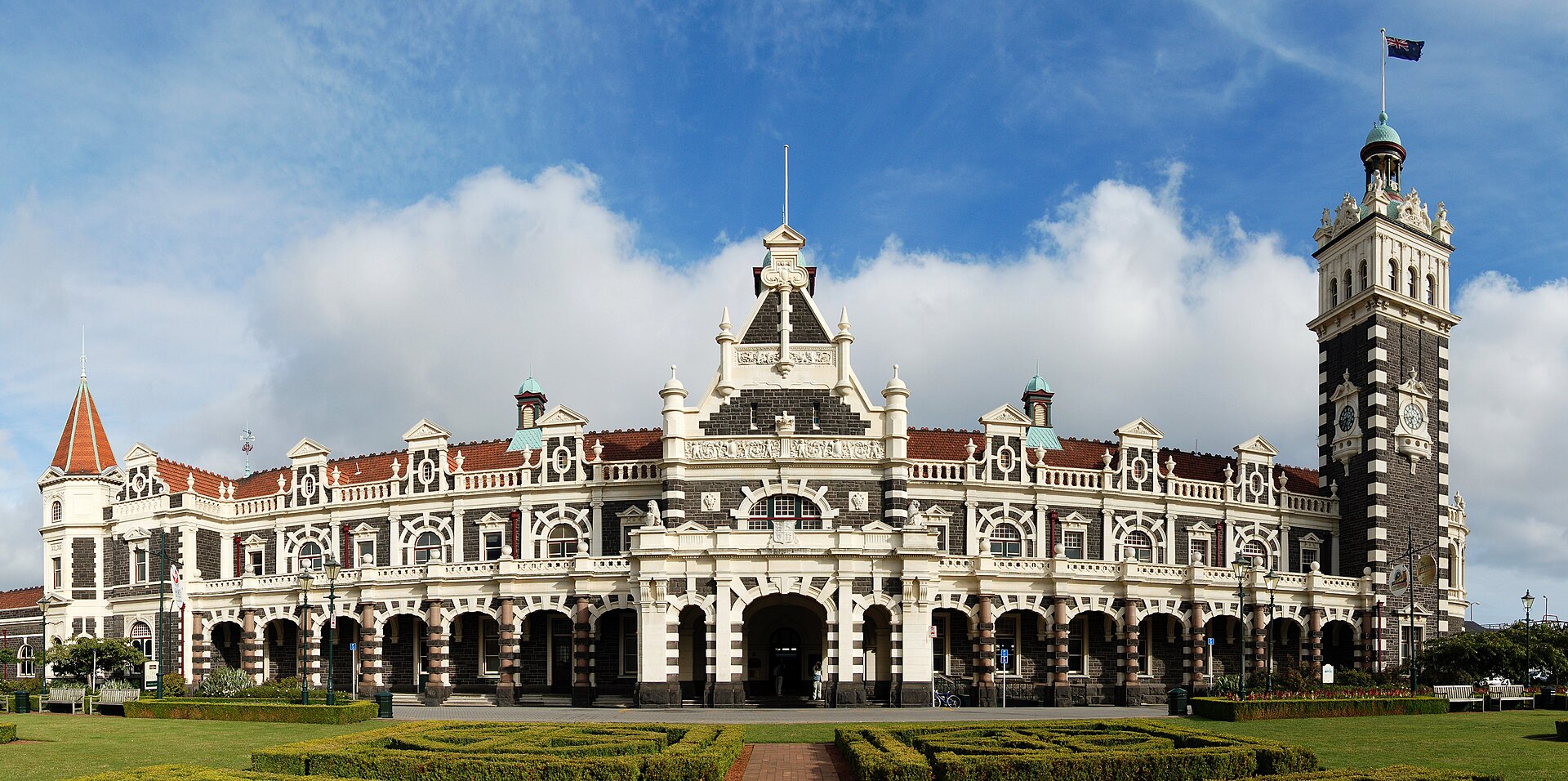
After breakfast, turn your attention to the station rather than automatically looking for a train departure. Built in 1906 and designed by George Troup, it is a substantial part of Dunedin’s civic heritage. Tohu Whenua describes its contrasting dark basalt and pale Oamaru limestone facings and its elaborate Renaissance-inspired architecture.
Begin outside, where you can compare the large composition with a smaller detail around an entrance or window. If the public booking hall is open, look for its locomotive mosaic and railway-themed stained glass. Keep circulation space clear and follow staff directions; public access to one part of a working heritage building does not establish access to platforms or every room.
This itinerary does not include a scenic train ride. If you want one, treat it as a separate booking decision with its own timetable, ticket and check-in requirements. The existence of rail excursions at the station does not mean a suitable departure is available on your Saturday.
Third: an optional gallery, then a city pause
The Otago Art Society operates on Level 1 of the railway station, at 22 Anzac Avenue. Its own website currently lists public opening daily, 10:00–16:00. Check opening and the current exhibition programme for your date; a later event advertised on the website is not necessarily on view during your visit.
If you go in, choose a small number of works and give them time. Ask about the artist and medium where a label leaves you curious. For step-free access, lifts or other assistance, confirm arrangements before relying on an upstairs visit. If it is not practical, the architecture and market can still make a complete morning.
Leave the remaining time for a café, a meal or a modest central-city wander that suits the conditions. You need not append a peninsula drive, a wildlife trip or another attraction simply because there is space on the map.
Keep the spring weather in the plan
Check MetService’s Dunedin forecast and current warnings for your chosen day. Bring a windproof layer and adapt the amount of outdoor time to conditions. A market that normally operates in rain is not a reason to ignore a warning or an unsafe journey.
For more on choosing a limited meal-led visit, see our Reading Terminal Market lunch. Our Stockholm City Hall story offers another approach to looking at a civic landmark without a compulsory climb.
Sources
Checked 31 October 2026: Otago Farmers Market, its FAQ and news page; DunedinNZ’s station guide; Tohu Whenua’s heritage account; and the Otago Art Society. Services, vendors, access and opening can change. No train booking, wildlife sighting or special event is implied.
Image credit
Featured photograph: Dunedin Railway Station Full Exterior, Antilived, 15 January 2009, via Wikimedia Commons; CC BY-SA 3.0. The original is a stitched photographic panorama. Resized; responsive crops may vary. This historical exterior illustrates the location, not today’s market or current conditions.