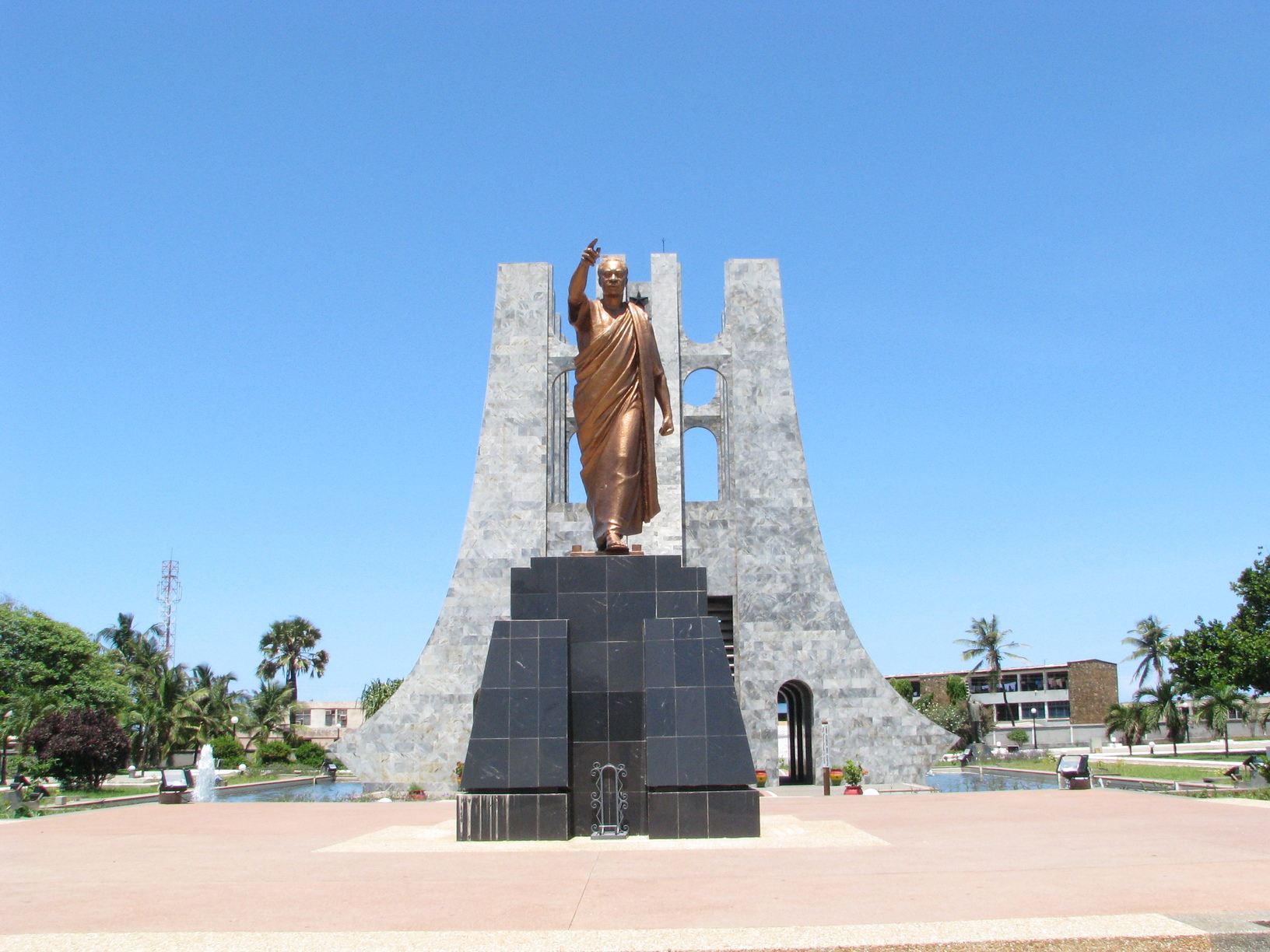
Accra makes more sense when a cultural visit leaves room for the city around it. Rather than trying to collect every landmark, give the National Museum and Kwame Nkrumah Memorial Park different jobs: one opens out the story of Ghana; the other concentrates attention on a person, an independence movement and the way national memory is presented.
This is a two-anchor day, not a continuous sightseeing walk. Plan a transfer, a proper lunch and enough spare time to abandon an extra stop. Traffic, heat and a shower should be ordinary parts of the plan, not reasons to rush through the collections.
Begin with breadth at the National Museum
The Ghana Museums and Monuments Board describes the National Museum’s collections through archaeology, ethnography and art. Established on 5 March 1957, it stands at 2 Barnes Road in Adabraka. Use that address when arranging your arrival rather than asking for an unspecified “museum in Accra”.
Start with a question you can carry into the galleries. How does an everyday object become something a museum asks us to preserve? What can a material, a maker’s name or a place of origin tell you that a broad national label cannot? Read the labels before deciding what an object represents. Ghana is not one tradition, and a single cabinet cannot speak for every community.
Choose two or three objects to look at carefully instead of trying to summarise the whole collection. Note whose perspective a label offers and what you would like to learn next. If a room or display is unavailable, ask staff what is currently accessible; do not expect a particular temporary exhibition simply because an older travel account mentions it.
Make the transfer a deliberate break
The museum and memorial park have separate addresses and entrances. Treat the journey between them as a transport leg, not as proof that every central attraction belongs to one easy pedestrian circuit. Ask your accommodation or museum staff about a suitable current pickup point. For a taxi, agree the destination and fare before leaving; for an app-booked car, match the vehicle and driver to the booking before getting in.
Leave a buffer around lunch rather than attaching a precise travel time to a traffic-dependent journey. Choose somewhere that is actually open and fits your needs, and keep water and a light rain layer accessible. A shaded pause is worth more than another stop added simply because it appears nearby on a map.
- Save both destination names, addresses and your return location offline.
- Ask before photographing people; keep phones and valuables discreet while arranging transport.
- Check access requirements directly if steps, standing time or mobility needs affect your visit.
- Drop the optional browsing stop before shortening the two main visits.
Read the memorial park as a place of memory
Kwame Nkrumah Memorial Park, on Prof. Atta Mills High Street, presents the legacy of Ghana’s first president. Its museum and mausoleum provide a more focused second chapter after the National Museum’s wider lens. The two institutions are complementary; they are not interchangeable versions of the same stop.
Spend time with the interpretation before turning the outdoor setting into a sequence of photographs. Look at how a memorial selects moments and gives them emphasis. A monument tells you something about its subject, but also about the people and institutions doing the remembering. You do not need to settle every historical question in an afternoon to leave with a better one.
Respect the mausoleum as a commemorative space. Follow staff instructions about access and photography, and do not assume a ticket includes a guided tour at the exact time you arrive. If a guide is important to you, ask the park directly about availability, language, duration and any separate charge before building your day around it.
Let everyday life stay everyday
The park’s visitor page identifies the neighbouring Arts Centre as a place to browse crafts. Make it optional, not a third compulsory cultural institution. If you choose to shop, ask about the maker, material and price, and take time to understand what you are buying. A conversation is not permission for a portrait, and declining a purchase need not become a performance of bargaining.
Keep working entrances and stalls clear. Avoid photographing children or a private exchange without consent. The same principle informs our Essaouira guide to browsing and a working harbour: travel becomes more interesting when the visitor is not the centre of every scene.
Check the practical details, then keep the day flexible
As checked on 8 October 2026, GMMB lists the National Museum’s visiting hours as 9am–4:30pm daily and non-Ghanaian adult admission as GH¢80. The memorial park lists 9am–7pm Monday–Saturday, 10am–7pm Sunday, and GH¢100 for a non-Ghanaian adult. These are the published visitor listings, not guarantees against a special closure or a separate last-entry rule. Recheck both operators before travelling; ask about payment methods and concessions rather than assuming them.
If rain persists, give the indoor collection more time and shorten the outdoor part, subject to staff advice. If heat or delays leave you tired after the first visit, do not force the second. Arrange the return while you still have an easy margin, especially if you would otherwise be leaving an unfamiliar pickup area after dark. Two cultural anchors are a useful shape for a day, not a completion target.
Sources and photograph
Institutional context and visitor details checked 8 October 2026 against the Ghana Museums and Monuments Board and Kwame Nkrumah Memorial Park, linked above. Opening arrangements, admission and available displays can change. Route structure and pacing are editorial suggestions, not a booked tour.
Featured photograph: Kwame Nkrumah’s statue and mausoleum, Accra, photographed 10 May 2008 by Emkamau, via Wikimedia Commons. CC BY-SA 4.0. Original photograph; resized or cropped for display where needed, with derivatives under the same licence. This archival view predates the park’s later renovation and does not show all current facilities.
