Dresden is easiest to enjoy when you stop treating its museums and riverfront as rival attractions. Give each half-day one serious collection, then use the Elbe as the open-air layer between them. The result is a weekend with room to look properly, eat at a normal pace and change course when a gallery, weather front or tired pair of feet asks for it.
Choose the museum layer before you book the day
Start with the Staatliche Kunstsammlungen Dresden (SKD) calendar for your exact dates. The Old Masters Picture Gallery in the Zwinger is normally open from 10am to 5pm and closes on Mondays; the Mathematical-Physical Salon and Porcelain Collection normally run from 11am to 5pm and also close on Mondays. Temporary construction matters: the Porcelain Collection is closed from 7 September through 30 October 2026, so a late-September weekend should not be built around it.
Choose one anchor, not every institution on the map. Old Masters suits a first visit built around painting and the Zwinger. The Albertinum makes a strong second-day alternative for art from Romanticism onward, while the Royal Palace is the better fit when court culture and object collections are the draw. Check the live SKD shop for current admission and any timed entry rather than relying on an old price quoted elsewhere.
Saturday: Old Masters, then open air
Give the Old Masters Picture Gallery the first substantial block of the weekend. Arrive close to opening, leave your buffer intact and plan roughly two and a half to three hours rather than promising yourself a complete survey. Pick a few rooms you genuinely want to see; a short café break is more useful than turning the last galleries into a memory test.
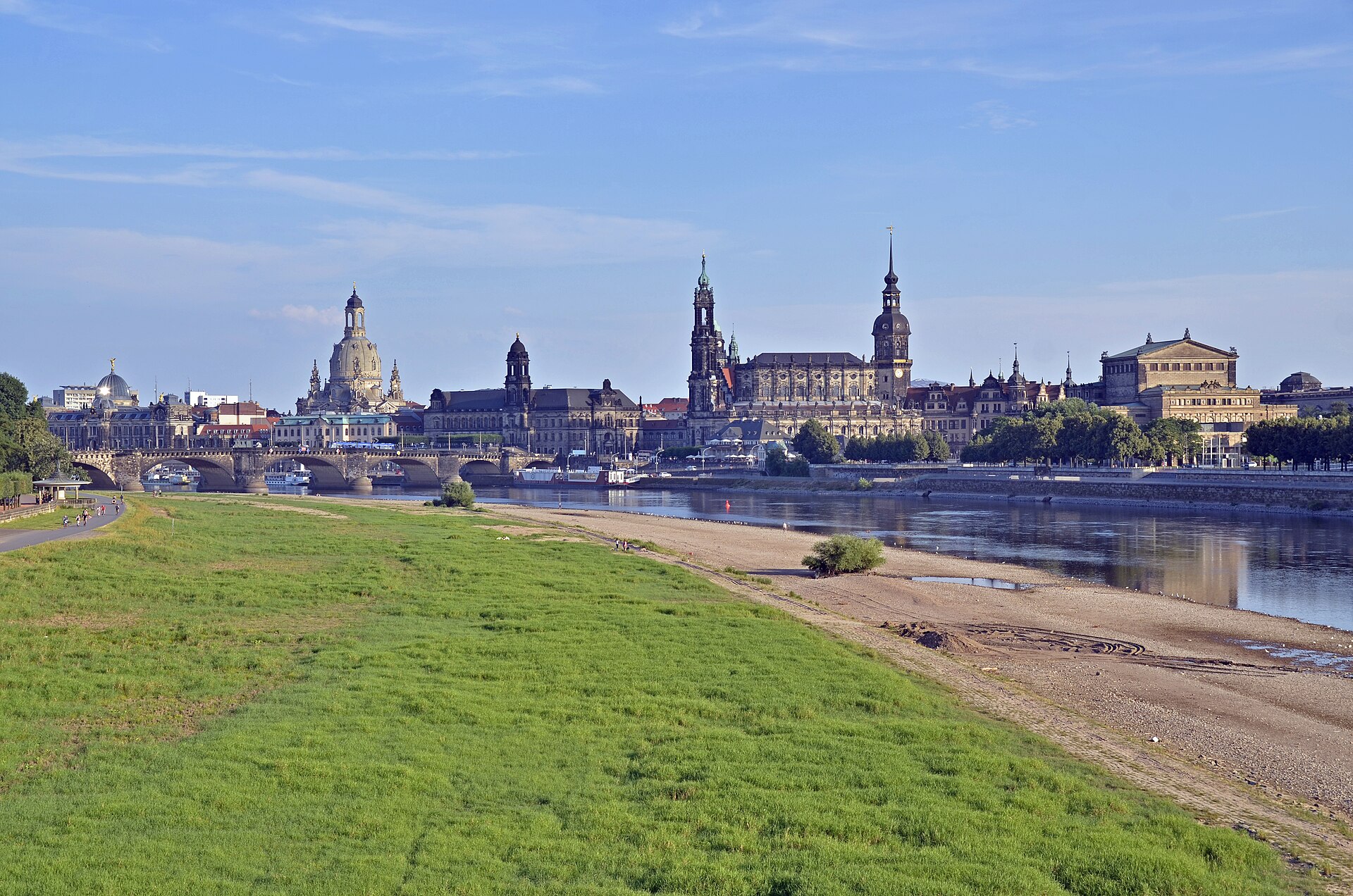
After lunch, step out toward Theaterplatz and Terrassenufer. This is the point at which the weekend changes texture: stone façades, broad sky and river movement replace labels and controlled light. Cross the Augustus Bridge only if the weather and your energy agree. The value is not in ticking off both banks but in seeing the city front from enough distance to understand it.
One major collection per half-day is enough; the river is breathing space, not wasted time.
Use the Elbe as the second layer
Dresden’s official visitor information describes the Elbe running for about 23 kilometres through the city, with meadows and the Elbe Cycle Route beside it. In the centre, that gives you several useful scales of outing:
- Thirty minutes: walk along Terrassenufer and pause for the skyline rather than forcing a bridge loop.
- Ninety minutes: cross to the Neustadt bank, follow the riverside and return by the next convenient central bridge.
- Half a day: rent a bicycle only if the forecast, daylight and your confidence in city riding all line up.
The city also maintains pedestrian wayfinding at dozens of central locations, but a downloaded map still helps when a phone battery fades. Keep the river on one side and the museum quarter on the other; the geography is more forgiving than a tightly sequenced attraction list.
Sunday: choose Albertinum or the Royal Palace
On Sunday morning, make a second deliberate museum choice. Pick the Albertinum if you want a clearer chronological contrast with the Old Masters. Pick the Royal Palace if the weekend is really about Dresden’s court collections. Either way, resist adding a third major institution just because it is nearby.
Build a lunch break after the museum, then return to the river from a different angle. Brühl’s Terrace offers a high, architectural edge; the Neustadt bank gives the classic panorama across water and meadows. If Saturday was sunny, save Sunday’s softer light for the skyline. If rain arrived, reverse the order and let the museum take the longer block.
A bad-weather swap that keeps the weekend intact
Rain does not require a new itinerary. Keep the museum anchor, shorten the exposed river section and add a sheltered café or church visit between the two. A boat trip can be appealing, but schedules and river conditions change; treat it as a same-day bonus, not the structural hinge of the weekend. The same principle works in other wet cities—our rainy Bergen plan uses one substantial indoor stop and a conditional outdoor layer.
How to move without overplanning
The historic centre is compact enough for most of this route on foot. Use a tram when it protects your museum time or energy, not because every short transfer needs to be scheduled. Check the local transport app on the day for works and service changes, and remember that cobbles, stairs and long gallery floors add up even when the map looks small.
If anyone in your group needs step-free access, verify entrances and lifts with each museum before arrival. River paths are generally the gentler part of the plan, but bridge approaches and construction diversions can change the easiest line.
A useful two-day outline
- Saturday morning: Old Masters Picture Gallery, with a focused shortlist.
- Saturday afternoon: lunch, Theaterplatz and a flexible Elbe walk toward the Neustadt bank.
- Sunday morning: Albertinum or Royal Palace—one, not both.
- Sunday afternoon: Brühl’s Terrace, riverside time and an unhurried final meal.
This plan works because the river absorbs change. A late museum exit, a shower or a long lunch shortens a walk without breaking the weekend.
Planning sources: SKD live Zwinger ticket and opening information; SKD 2026 visitor information; City of Dresden walking and transport guidance; and City of Dresden Elbe and parks information. Checked 26 September 2026.
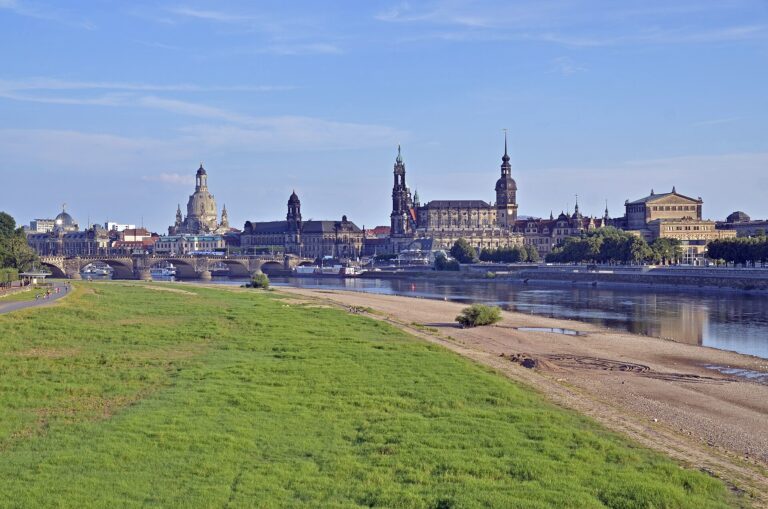
Featured image: Dresden’s skyline beside the Elbe, photographed by Guido Radig. CC BY 3.0 via Wikimedia Commons; Wikimedia-rendered resize, no editorial crop.